Good books do more than keep your accountant happy at tax time. They tell you your food cost this week, whether labor is creeping up, and how much cash you’ll have to cover payroll on the 15th. That’s exactly where restaurant bookkeeping in Cincinnati earns its keep.
What restaurant bookkeeping actually involves
Restaurant bookkeeping is the day-to-day process of recording, organizing, and reconciling a restaurant’s financial activity — sales, purchases, payroll, and expenses — so owners can track profit, manage cash flow, and stay on the right side of tax rules. It’s a different animal from bookkeeping for a law office or a retail shop: restaurants deal with high transaction volume, perishable inventory, tipped wages, and razor-tight margins, all at once. Here’s what the work usually covers:
- Daily sales tracking from your point-of-sale (POS) system
- Cost of goods sold (COGS) for food and beverage
- Payroll, including tipped-wage rules and tip reporting
- Accounts payable to food distributors like Sysco or Gordon Food Service
- Bank and credit card reconciliation
- Sales tax collection and remittance to the state
- Monthly financial statements you can actually read
Daily sales reconciliation
This is the habit that separates restaurants with a handle on their money from the ones flying blind. Every day, your POS records gross sales, discounts, comps, voids, taxes, and tips. That daily summary should be matched against what actually lands in your bank account. Do this daily or weekly and you catch problems while they’re small — a register that’s short, a server error, a credit card batch that never settled. Wait until month-end and you’re doing detective work on transactions you barely remember.
Cost of goods sold (COGS)
Your COGS is what you spent on the food and drinks you sold. It’s not just what you bought — it’s tied to inventory. The formula is simple:
Beginning inventory + purchases − ending inventory = COGS
That’s why regular inventory counts matter. Without them, you’re guessing at your single biggest controllable cost. Break COGS into categories — food, beer, wine, liquor, non-alcoholic beverages — so you can spot exactly where money is leaking.
Prime cost: the number that matters most
If you track one thing, track prime cost. Prime cost is your total COGS plus total labor (wages, salaries, payroll taxes, and benefits). It captures the two costs that make or break a restaurant. Most operators aim to keep prime cost around 60% of sales. For full-service spots, 65% is often the ceiling before profit disappears. The benchmarks worth watching:
| Metric | Typical target (% of sales) | What it tells you |
|---|---|---|
| Food cost | 28–35% | Menu pricing and portion control |
| Beverage / pour cost | ~18–24% | Bar profitability and waste |
| Labor cost | 25–35% | Staffing efficiency |
| Prime cost | ~60% (65% max) | Overall operating health |
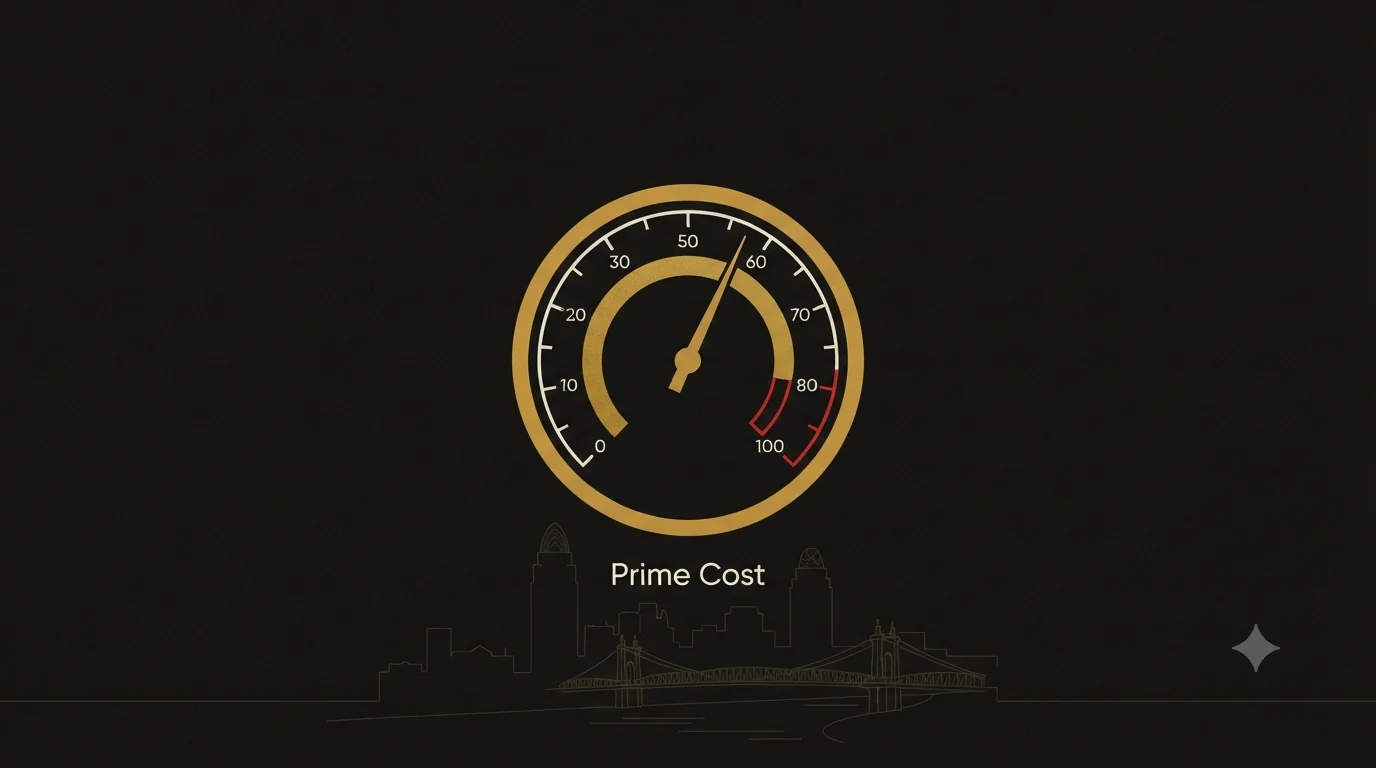
If prime cost drifts past your target for a few weeks running, something needs to change — pricing, portions, scheduling, or vendor deals.
What makes restaurant bookkeeping in Cincinnati different
National advice only gets you so far. Ohio and Hamilton County have their own rules, and getting them wrong is expensive. Solid restaurant bookkeeping in Cincinnati means knowing these cold.
Ohio sales tax on food
Cincinnati sits in Hamilton County, where the combined sales tax rate is 7.8% in 2026 (5.75% state plus 2.05% county). But not everything you sell is taxed the same way. Ohio taxes food based on where it’s eaten:
| Sale type | Taxed in Ohio? |
|---|---|
| Dine-in meals (eaten on premises) | Yes — taxable |
| Carryout / to-go food (off premises) | Generally exempt |
| Alcoholic beverages | Always taxable |
| Soft drinks | Taxable |
So the same burger can be taxable or exempt depending on whether the guest eats in or takes it to go. Your POS needs to handle that split correctly, because you remit what you collect. Most restaurants file sales tax monthly through the Ohio Business Gateway (monthly filers are due by the 23rd). Always confirm the finer points with the Ohio Department of Taxation, since food and beverage rules have plenty of edge cases.
The Commercial Activity Tax (CAT) — good news
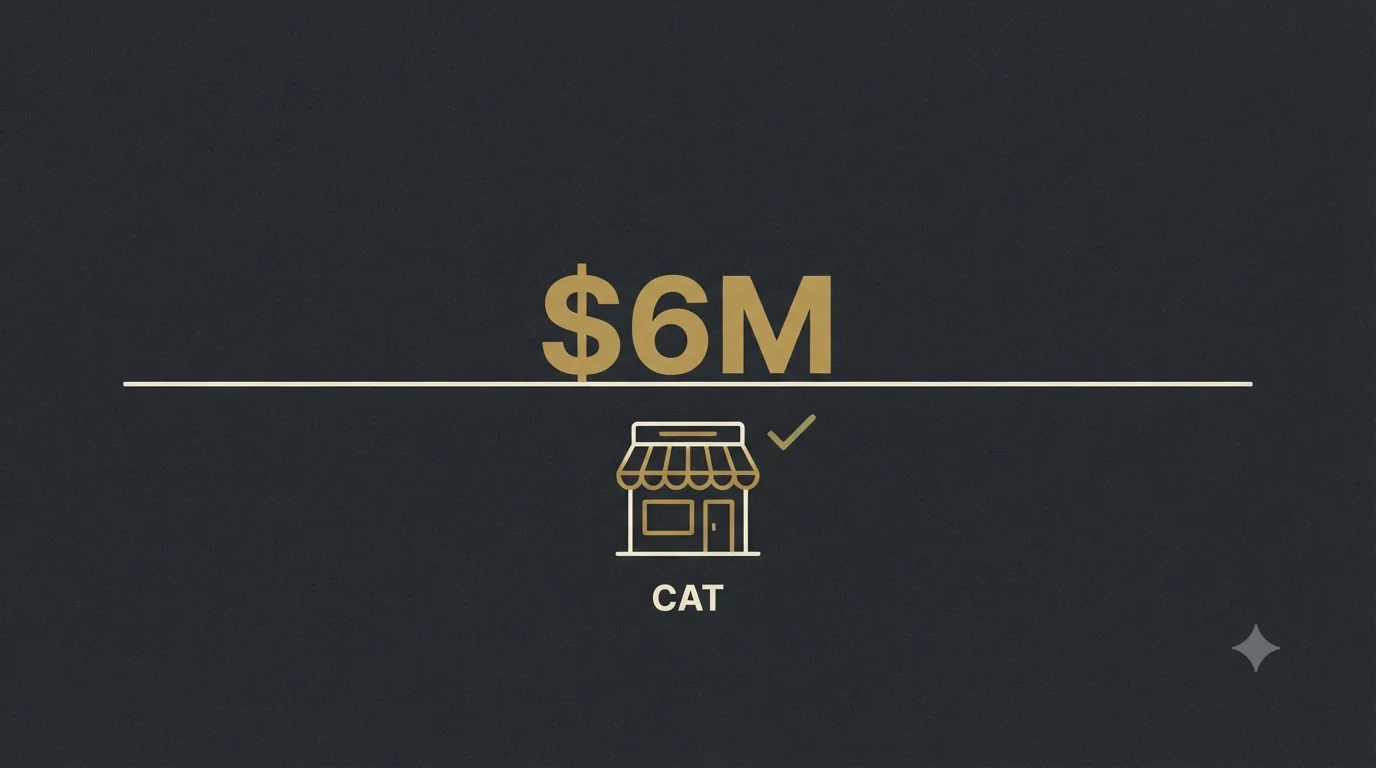
For years the Ohio Commercial Activity Tax caught a lot of small businesses. That’s changed. As of 2025 and beyond, the exclusion is $6 million in Ohio taxable gross receipts, and the rate is 0.26% on receipts above that. In plain English: if your restaurant does less than $6 million a year in Ohio sales, you likely owe no CAT and may not need to file at all. Many independent Cincinnati restaurants now fall below the line. If you’re above it, or you own several locations, the combined receipts get counted together — worth a conversation with a pro.
Payroll and tipped wages
Restaurant payroll in Cincinnati is its own headache, mostly because of tips. For 2026, Ohio’s minimum wage is $11.00 an hour for non-tipped employees and $5.50 an hour for tipped employees, and these apply to businesses with annual gross receipts above $405,000. The tipped rate comes with a catch: if a server’s cash wage plus tips doesn’t reach the full $11.00 for the hours worked, you have to make up the difference. Your books need to track hours, tips, and the tip credit carefully so you stay compliant and your payroll math holds up. This is one area where getting help with restaurant payroll services pays for itself. Rates adjust every January based on inflation, so check the current figures with the Ohio Department of Commerce.
Tip reporting and the IRS
Tips are taxable income, and the reporting rules are specific. Employees report tips to you, you include them on their W-2, and you handle the employer share of FICA on those tips. Two federal items to know:
- Form 8027 — large food and beverage establishments (generally more than 10 employees) file this annual information return on tips.
- Form 8846 — lets you claim a credit for the employer’s share of Social Security and Medicare taxes paid on employee tips.
There’s also a newer wrinkle: a federal deduction on qualified tips is available to employees for tax years 2025 through 2028. It doesn’t change your obligation to track, withhold on, and report tips — but it’s something your staff will ask about, so it helps to know it exists. Check current details with the IRS.
Setting up your books the right way
A clean setup saves you months of cleanup later. A few things make the biggest difference.
Build a restaurant-specific chart of accounts. Generic templates lump everything together. You want separate accounts for food, beverage categories, direct labor, and operating costs so your reports mean something. If you’re moving off spreadsheets or an old system, a proper QuickBooks setup built for restaurants is the foundation everything else sits on.
Connect your POS to your accounting software. QuickBooks for restaurants is the common backbone, and it integrates with most POS platforms like Toast and Square, plus inventory tools like MarginEdge or Restaurant365. The goal is to stop hand-keying daily sales.
Use accounting periods, not calendar months. Smart operators run on thirteen four-week periods instead of twelve months. Every period then has the same number of days and the same number of weekends, so you can actually compare period to period without a February-versus-July mismatch throwing you off.
Reconcile every account monthly. Bank, credit cards, loans, and merchant deposits. If you’ve fallen behind, catch-up bookkeeping gets you current before small gaps snowball into a tax-season scramble.
Benefits of getting it right
- You see problems early. A rising food cost shows up in a weekly report, not a year-end surprise.
- Cash flow gets predictable. You know what’s coming so payroll and rent never catch you off guard.
- Menu decisions get smarter. You learn which dishes actually make money versus which just sell.
- Tax time stops being a fire drill. Clean records mean fewer scrambles and fewer missed deductions.
- Financing gets easier. Lenders and landlords want clear statements before they say yes.
Common restaurant bookkeeping mistakes
- Mixing personal and business spending. The fastest way to muddy your books and raise audit flags. Keep a dedicated business account and card.
- Skipping inventory counts. Without them, your COGS and food cost are guesses.
- Recording sales as one lump number. You need the breakdown — food, alcohol, tax, tips, comps — to manage anything.
- Ignoring the tip-credit math. Underpay a tipped worker and you’ve got a wage-and-hour problem.
- Falling behind on reconciliation. Three months of unmatched transactions is a nightmare to untangle.
- Treating the CAT and sales tax as the same thing. They’re different taxes with different rules.
Best practices that keep kitchens profitable
- Reconcile daily sales against bank deposits, every day.
- Count inventory weekly for high-cost items, at minimum monthly for everything.
- Review prime cost weekly and act when it drifts.
- Keep receipts and invoices digital so nothing gets lost in a drawer.
- Close the books on a fixed schedule — same routine, every period.
- Read your P&L monthly and compare it to prior periods and your targets.
In-house vs. outsourced bookkeeping
Should you hire someone or bring in a firm? It depends on your size and volume.
| Factor | In-house bookkeeper | Outsourced firm |
|---|---|---|
| Cost | Salary + benefits + software | Flat monthly fee |
| Restaurant expertise | Varies by hire | Specialized, built-in |
| Coverage | One person; gaps during time off | Team-based, always covered |
| Best for | High-volume, multi-unit groups | Most single and small groups |
For many Cincinnati restaurants, outsourced bookkeeping services deliver specialized expertise without the cost of a full-time hire.
Why choose Numerawise Solutions
At Numerawise Solutions, we work in the details that restaurants live and die by — food cost, prime cost, tip compliance, and Ohio-specific tax rules. We’re not a generalist firm learning your business on your dime. We set up clean, restaurant-ready books in QuickBooks, connect them to your POS, and keep them reconciled so your numbers are current when you need them. Whether you’re opening your first spot in Over-the-Rhine, cleaning up months of neglected records, or running several locations, we tailor the work to how your kitchen actually operates. You get accurate reports, straight answers, and time back to run your restaurant instead of chasing spreadsheets.
Keeping your restaurant’s books on track
Strong restaurant bookkeeping in Cincinnati isn’t about impressing an auditor. It’s about knowing your numbers well enough to make confident calls — on pricing, staffing, and spending — before problems eat your profit. The restaurants that thrive here treat their books as a management tool, not a year-end chore.
Nail the fundamentals: reconcile daily, count inventory, watch prime cost, and stay current on Ohio’s sales tax, CAT, and tipped-wage rules. Do that consistently and you’ll always know where you stand. And if the day-to-day is pulling you away from the kitchen, bringing in a specialist who understands Cincinnati restaurants can be the smartest line item on your P&L.
Key takeaways
- Restaurant bookkeeping in Cincinnati turns POS data, invoices, and payroll into a clear profit picture.
- Prime cost (COGS + labor) is the single most important number — aim for around 60% of sales.
- Cincinnati’s sales tax rate is 7.8%; dine-in food is taxable, most to-go food is exempt, and alcohol is always taxed.
- Ohio’s CAT exclusion is $6 million (2025+), so many independent restaurants owe nothing.
- Ohio’s 2026 minimum wage is $11.00 ($5.50 tipped) — and you must cover the gap if tips fall short.
- Reconcile daily, count inventory regularly, and run on 13 four-week periods for cleaner comparisons.
Quick answers.
What does restaurant bookkeeping in Cincinnati cost?
It depends on your sales volume, number of locations, and how much cleanup is needed. Outsourced restaurant bookkeeping typically runs from a few hundred dollars a month for a small single location to over a thousand for higher-volume or multi-unit operations. The price usually reflects transaction count, payroll complexity, and how often you want reports.
Do I charge sales tax on restaurant food in Ohio?
Dine-in meals are taxable at Hamilton County’s 7.8% rate. Food sold to-go for off-premises consumption is generally exempt, while alcohol and soft drinks are always taxable. Your POS must apply the right treatment because you remit what you collect. Confirm specifics with the Ohio Department of Taxation, since food rules have several exceptions.
What is prime cost and why does it matter?
Prime cost is your total cost of goods sold plus total labor. It combines the two largest controllable expenses in a restaurant, so it’s the clearest signal of operating health. Most restaurants target around 60% of sales, with 65% as the upper limit for full-service. Watch it weekly and adjust pricing or scheduling when it climbs.
How often should a restaurant reconcile its books?
Reconcile daily sales against bank deposits every day, and reconcile all accounts — bank, credit cards, merchant deposits, and loans — monthly. Daily habits catch register shortages and settlement errors while they’re fresh. Monthly closes keep your statements accurate. Falling behind for even a few months turns routine work into a difficult, error-prone cleanup.
Does my Cincinnati restaurant owe the Ohio Commercial Activity Tax (CAT)?
Probably not, if your Ohio taxable gross receipts are under $6 million a year — the exclusion in place for 2025 and beyond. Above that threshold, the rate is 0.26% on receipts over $6 million. If you own multiple locations or entities, their receipts may be combined, so check your total position with a professional.
What's the difference between bookkeeping and accounting for restaurants?
Bookkeeping is the ongoing recording and reconciling of daily financial activity — sales, purchases, payroll, and expenses. Accounting builds on that data to prepare statements, analyze performance, plan taxes, and advise on strategy. Think of bookkeeping as keeping the record straight and accounting as interpreting what that record means for your business.
Which accounting software works best for restaurants?
QuickBooks Online is the most common backbone, and it connects with major POS systems like Toast and Square, plus restaurant tools such as MarginEdge and Restaurant365. The right mix depends on your size and menu. The key is integration — your POS should feed daily sales into your books automatically instead of you keying it in by hand.
How do I handle tip reporting for my staff?
Employees report their tips to you, you include those tips on their W-2, and you pay the employer’s share of FICA on them. Larger establishments (generally more than 10 employees) also file Form 8027 annually. You may claim a credit using Form 8846. Accurate hour and tip tracking keeps you compliant and your payroll correct.
Should I hire an in-house bookkeeper or outsource?
High-volume or multi-unit groups may justify a full-time in-house bookkeeper. For most single locations and small groups, outsourcing costs less and brings built-in restaurant expertise, plus team coverage so nothing stalls during vacations. Weigh the total cost of a salary, benefits, and software against a flat monthly fee before deciding.
What records do I need to keep, and for how long?
Keep sales reports, invoices, bank and merchant statements, payroll records, and tax filings. As a general rule, retain most records at least three to four years; some payroll and tax records should be kept longer. Ohio’s CAT records, for example, are typically kept four years. When in doubt, hold records longer rather than shorter.
Get a free scoping call.
Tell us what you’re working on. We respond same business day.

Ram · Founder & Principal
Founder of Numerawise Solutions, established MMXXIV in Atlanta. Intuit ProAdvisor Gold tier. Former Intuit Technical Support engineer. Has personally led two hundred accounting software conversions for US small businesses since founding the practice. Reachable directly at [email protected].
Free: The Clean-Cutover Checklist
The step-by-step checklist we use to migrate businesses to QuickBooks without losing data — bank rec, opening balances, payroll YTD, and the validation tie-out. Get it in your inbox.
No spam — just the checklist and the occasional QuickBooks tip.