Most restaurant owners in Colorado do not lose money because the food is bad. They lose it because nobody caught the numbers drifting until the bank balance said so.
Restaurant bookkeeping in Colorado comes with challenges most industries never face: tip credits that change by city, sales tax rates that shift when you cross a street, food costs that swing week to week, and margins so thin that a 2% error in cost tracking can erase your profit. A retail shop can review its books monthly and be fine. A restaurant that waits 30 days to look at prime cost is already four weeks behind a problem.
Why restaurant bookkeeping in Colorado is different
Every restaurant deals with perishable inventory, tipped payroll, and daily cash handling. Colorado adds its own layer on top.
Wage and tip rules change by city — and by year
Colorado’s minimum wage adjusts every January based on inflation. For 2026, the statewide rate is $15.16 per hour, with a tipped cash wage of $12.14 after the constitutional $3.02 tip credit. But that is only the floor:
| Jurisdiction (2026) | Standard minimum wage | Tipped minimum (food & beverage) |
|---|---|---|
| Colorado (statewide) | $15.16 | $12.14 |
| Denver | $19.29 | $16.27 |
| Boulder County (unincorporated) | $16.82 | $13.80 |
| Edgewater | $18.17 | $13.50 |
A restaurant group with one location in Denver and one in Colorado Springs is running two different payroll structures. Your books have to reflect that, and your bookkeeper needs to verify weekly that every tipped employee’s wages plus tips reach the full applicable minimum — Colorado requires the employer to make up any shortfall.
House Bill 25-1208 also changed the game in 2026: cities with higher local minimums can now expand the tip credit beyond $3.02. Edgewater already did; Denver and Boulder are under pressure to follow. If your bookkeeping and payroll setup cannot adapt to a mid-year local ordinance change, you will either overpay or expose yourself to a wage claim. The Colorado Department of Labor and Employment publishes the current PAY CALC order each year — bookmark it.
Sales tax is genuinely complicated here
Colorado’s state sales tax is 2.9%, but the real rate your customers pay depends on county, city, and special-district taxes stacked on top. More importantly, Colorado has dozens of home-rule cities that administer their own sales tax separately from the state. Denver, Boulder, Colorado Springs, and many others require their own registrations, their own returns, and sometimes their own definitions of what is taxable. If you sell prepared food for delivery, Colorado’s retail delivery fee also applies to qualifying orders. Miss a filing in a home-rule city and the penalty notice arrives whether or not you knew that city collected its own tax.
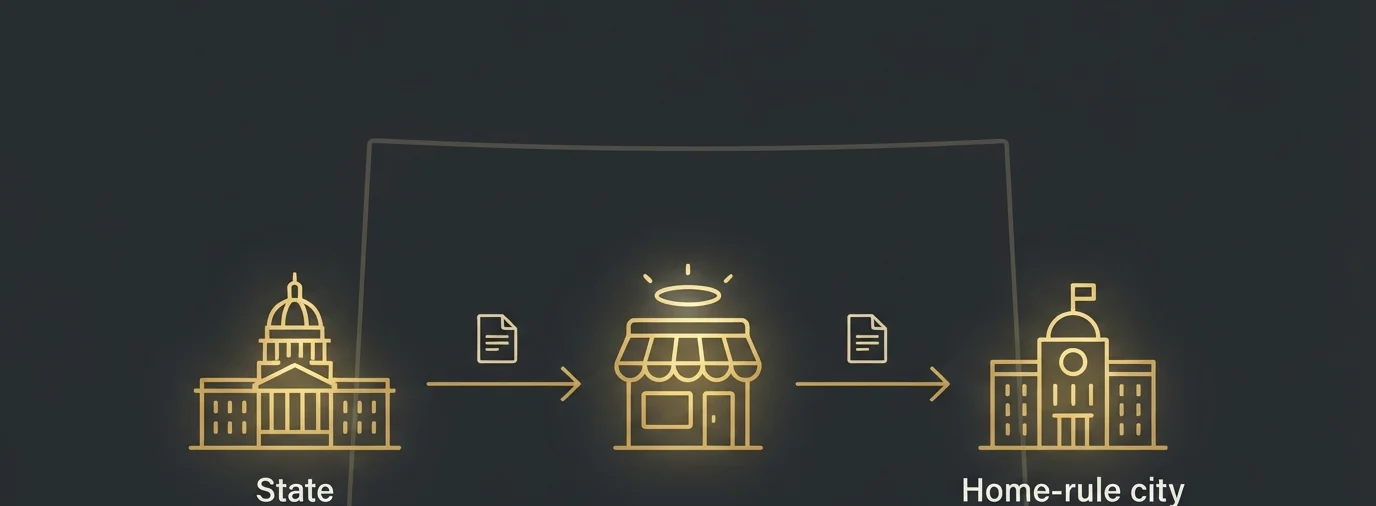
Good restaurant bookkeeping in Colorado means each location’s tax-liability accounts are set up correctly from day one, POS tax settings match the actual jurisdiction rates, and collected tax is treated as a liability — never as revenue.
Tips create a reporting chain that is easy to break
Tips flow through the POS, payroll, the general ledger, and IRS reporting. Large food and beverage establishments (generally more than 10 employees) file Form 8027 annually to report tip income and allocated tips. Employee W-2s must reflect reported tips. And in Colorado, if you deduct credit-card processing fees from tips, you lose the tip credit entirely. When the POS says one number, payroll says another, and the ledger says a third, you have a problem that compounds monthly. Reconciling those three sources is a core part of bookkeeping for restaurants — not an optional extra.
The numbers every Colorado restaurant should track weekly
Monthly financials are for tax season. Weekly numbers are how you actually run the business.
Prime cost — the one metric that decides your fate
Prime cost is cost of goods sold plus total labor (wages, payroll taxes, benefits, workers’ comp). For most full-service restaurants, a healthy prime cost sits around 60–65% of sales. In Denver, with a $19.29 minimum wage pushing labor up, hitting that range takes tighter food-cost control than it does in a lower-wage market. To calculate it, you need:
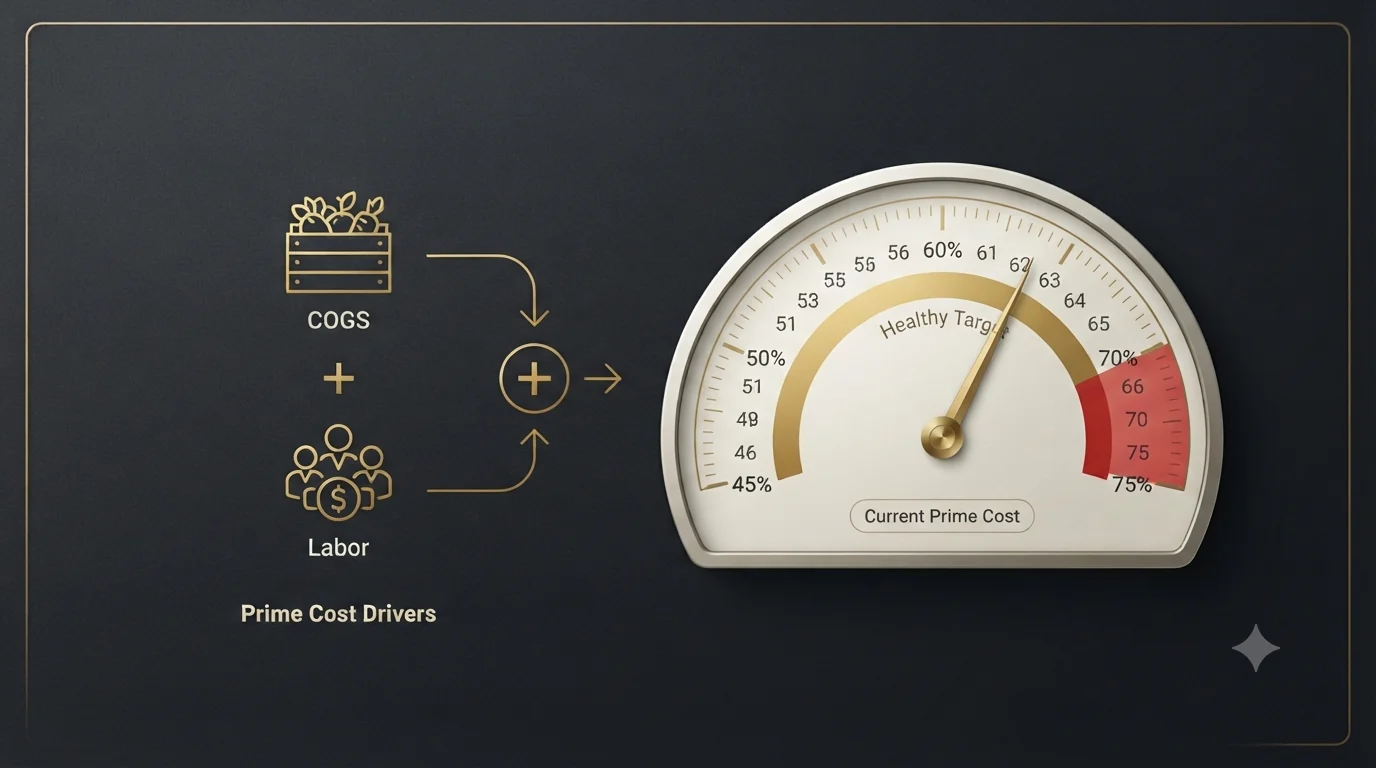
- Weekly inventory counts (or at least a solid estimate) so COGS reflects what you actually used, not just what you purchased.
- Payroll accrued to the same week, not the pay period.
- Sales from the POS, net of comps and discounts.
If your books only produce this number once a month, you are steering with a rearview mirror.
A restaurant-specific chart of accounts
Generic accounting templates lump “food purchases” into one expense line. That tells you nothing. A proper restaurant chart of accounts separates:
- Food cost by category (proteins, produce, dairy, dry goods)
- Beverage cost split into liquor, beer, wine, and non-alcoholic
- Front-of-house vs. back-of-house labor
- Sales tax payable by jurisdiction (critical in Colorado)
- Tips payable as a pass-through liability
This structure is what makes your P&L readable. When beverage cost jumps from 22% to 28%, you want to know in one glance whether it is the bar pouring heavy or a wine pricing issue.
Daily sales reconciliation
Every day, POS sales should tie to bank deposits, with credit-card fees, cash deposits, gift-card activity, and third-party delivery payouts (DoorDash, Uber Eats) each accounted for. Delivery platforms are a common leak — they deposit net of commissions, and if your books record the deposit as sales, you are understating both revenue and expenses.
Benefits of getting restaurant bookkeeping right
- You catch food-cost creep early. Vendors raise prices quietly. Weekly COGS tracking flags a supplier increase before it costs you a full quarter of margin.
- Payroll compliance stops being a gamble. Colorado’s wage-claim limits rose to $13,000 per claim starting July 2026, and the state now publishes violators’ names. Clean tip and wage records are your defense.
- Tax season becomes a formality. When sales tax, tip reporting, and payroll filings are reconciled monthly, year-end is a review — not an archaeology project.
- Lenders and landlords take you seriously. Expansion, refinancing, or a new lease all require financials that hold up to scrutiny.
- You can actually price your menu. Plate costing only works if your ingredient costs in the books are current.
Common restaurant bookkeeping mistakes we see in Colorado
- Recording third-party delivery deposits as sales. The deposit is net of 15–30% commission. Gross sales, commission expense, and any marketing fees need to be broken out.
- Treating sales tax as income. Collected tax belongs in a liability account. Restaurants that let it sit in the operating account routinely “spend” money that was never theirs — and Colorado home-rule cities audit.
- Using one payroll setup across multiple cities. A Denver location and a Lakewood location have different minimum wages and potentially different tip credits. One-size payroll means someone is being paid wrong.
- Skipping inventory counts. Without a count, COGS is just purchases, and purchases swing with delivery timing. Your food-cost percentage becomes noise.
- Letting the books lag 60–90 days. Restaurant margins are typically 3–6%. A problem discovered two months late has already consumed a year’s worth of profit at some locations.
- Mixing tip liabilities with wages. Tips are the employee’s property. They pass through your accounts but should never inflate your revenue or sit ambiguously in payroll expense.
Best practices for Colorado restaurant owners
- Close the books weekly, not monthly. A short weekly flash report — sales, prime cost, cash position — takes an hour when the process is set up right.
- Reconcile POS to bank to ledger every week. Three sources, one truth.
- Keep a compliance calendar. State sales tax, home-rule city returns, payroll tax deposits, Form 8027, and annual wage-rate updates each January.
- Use accounting software built to handle classes or locations. QuickBooks with location tracking lets multi-unit operators see per-store P&Ls without separate files.
- Document your tip-pool policy in writing. Colorado requires written notice for tip pooling and service charges, and managers cannot participate in the pool.
- Review the PAY CALC order every December. Rates change January 1, every year, without exception.
- Verify tipped wages weekly. Colorado does not let you average tip shortfalls across a month.
Why choose Numerawise Solutions
Numerawise Solutions provides outsourced bookkeeping services built around how restaurants actually operate — daily sales, tipped payroll, multi-jurisdiction sales tax, and weekly prime cost reporting instead of a generic monthly P&L.
Our team works extensively in QuickBooks, including migrations from legacy systems, so whether you are on QuickBooks Online, Desktop, or moving off spreadsheets entirely, the setup is done right the first time: a restaurant-specific chart of accounts, sales tax liabilities mapped by jurisdiction, and tip pass-throughs handled cleanly. Behind on your books? Our catch-up bookkeeping service reconstructs months (or years) of records, reconciles every account, and gets you audit-ready before it becomes a tax problem — and we can fold in payroll so wage compliance across cities is one team’s job. You run the floor. We will keep the numbers honest.
Conclusion
Restaurant bookkeeping in Colorado is not harder because the math is complicated — it is harder because the rules keep moving and the margins leave no room for delay. Wage rates reset every January. Cities set their own minimums and, as of 2026, their own tip credits. Home-rule sales tax means one restaurant group can owe returns to four different tax authorities. And prime cost does not wait for month-end to drift.
The operators who stay profitable treat their books as a weekly operating tool, not an annual tax chore. They know their prime cost every Monday, their sales tax is sitting in a liability account instead of the checking balance, and their tipped payroll can survive a Department of Labor audit. Whether you build that system in-house or hand it to a firm that specializes in restaurant bookkeeping, Colorado restaurants that watch their numbers weekly are the ones still open in five years.
Key takeaways
- Colorado’s 2026 minimum wage is $15.16 statewide ($12.14 tipped), but Denver, Boulder County, and Edgewater set higher local rates — payroll and books must match each location’s jurisdiction.
- Prime cost (COGS + labor) should be tracked weekly and generally kept in the 60–65% range.
- Home-rule cities in Colorado administer their own sales tax; registration and filing obligations vary by city.
- Third-party delivery deposits must be grossed up — the net deposit is not your sales figure.
- Tips are pass-through liabilities, and Colorado requires weekly verification that tips plus cash wages meet the full minimum.
- Books that lag 60+ days will hide problems longer than a 3–6% margin can absorb.