Most Florida restaurants do not close because the food was bad. They close because nobody watched the numbers until the checking account went quiet. Restaurant bookkeeping in Florida has its own rhythm — a 6% state sales tax plus a county surtax, a tipped wage that steps up every September 30, and food costs that move week to week. On top of that, full-service margins usually land between 3% and 6%, so a small tracking error becomes a real loss fast.
The good news: Florida is friendlier than most states in one big way — there is no state income tax, which makes payroll simpler here than in California or New York. This guide covers what to track, the Florida-specific rules that trip owners up, and the weekly habits that keep your books honest.
What makes restaurant bookkeeping in Florida different?
Every restaurant deals with perishable inventory, tipped staff, and daily cash. Florida adds a few wrinkles — and takes one away.
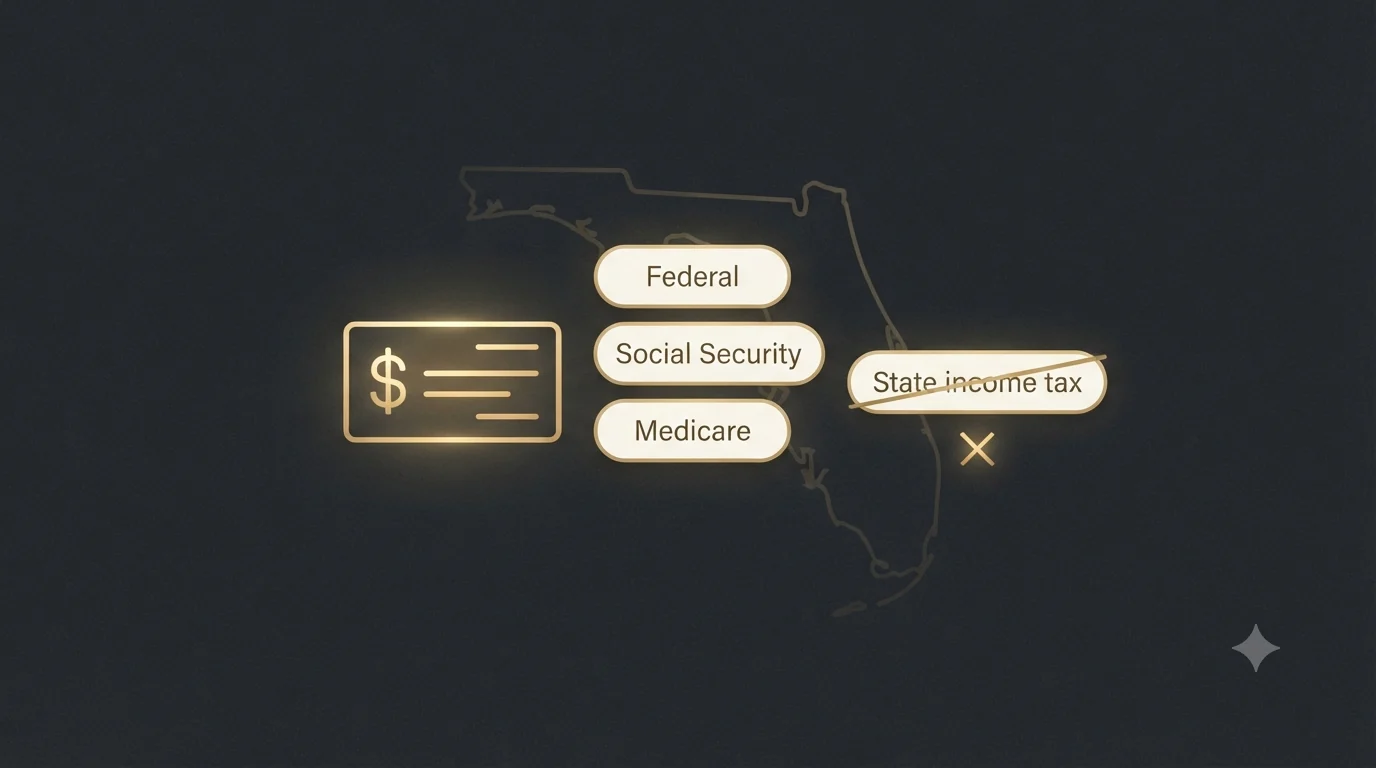
No state income tax. Florida has no personal state income tax, so you do not withhold state income tax from paychecks. That removes a whole layer of filings that operators in other states fight with every payroll. You still handle federal withholding, Social Security, Medicare, and Florida reemployment tax (the state’s version of unemployment tax, filed on Form RT-6).
Sales tax is 6% — plus a county surtax. Prepared food, dine-in or takeout, is taxable in Florida at the 6% state rate plus a discretionary county surtax that ranges from 0% to 2% depending on your location. So a check in one county might carry 6.5% while a location a few miles away carries 7.5%. You collect that tax, hold it in trust, and remit it on Form DR-15 through the Florida Department of Revenue.
The tipped wage keeps climbing. Under Florida’s constitution, the minimum wage rises $1 every September 30 until it hits $15.00 on September 30, 2026. Tipped employees get a $3.02 tip credit, so the tipped cash wage moves from $10.98 to $11.98 on that date. If tips plus cash wages do not reach the full minimum in a workweek, you owe the difference.
Weekly vs. monthly books
A retail shop can close its books monthly and be fine. A restaurant cannot. Food costs swing with pricing, waste, and portioning, so a monthly-only close means you spot a problem four to six weeks after it started. A short weekly close — sales, cost of goods, and labor — lets you fix a portioning issue while it is still small.
The core numbers: prime cost comes first
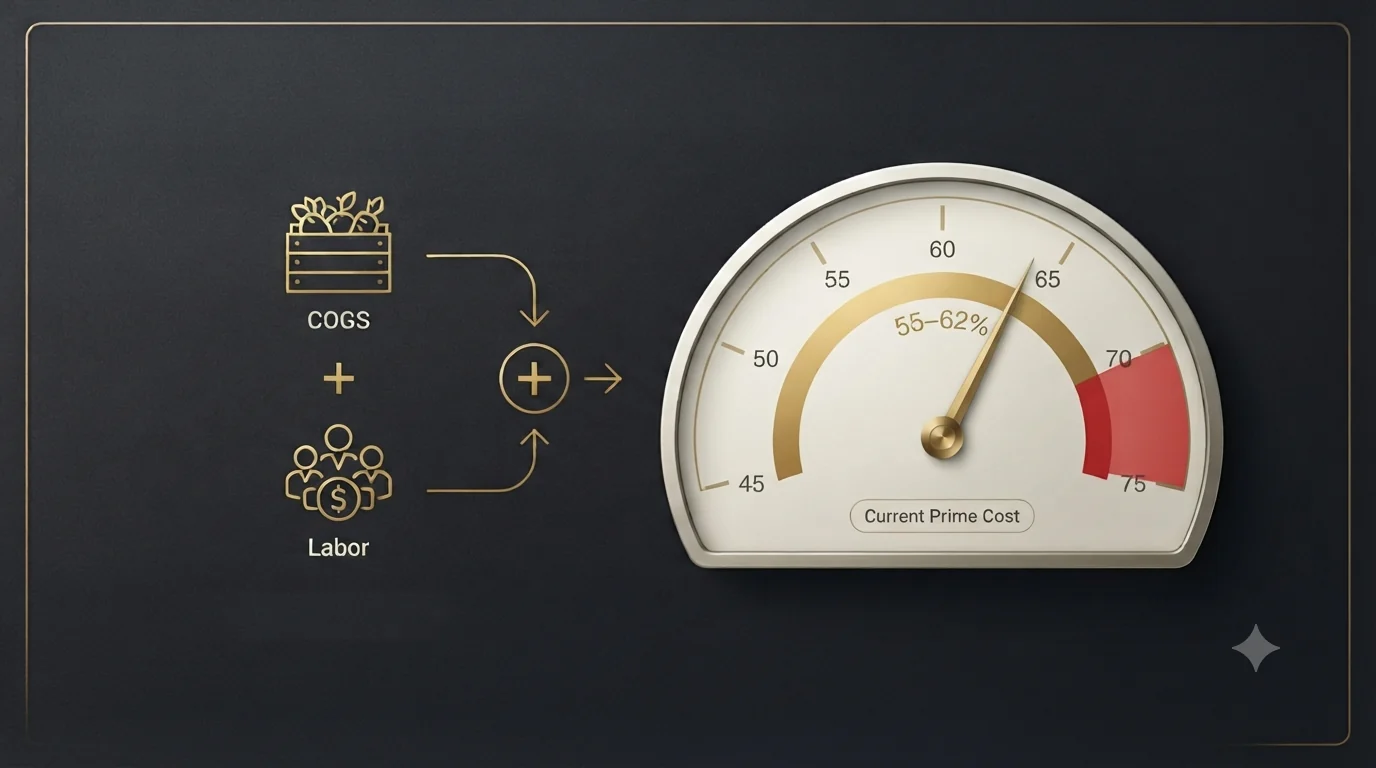
If you track only one thing, track prime cost — cost of goods sold plus total labor (wages, payroll taxes, and benefits) as a percentage of sales. It is the two big expenses you can actually control week to week.
| Metric | Healthy target | Warning zone |
|---|---|---|
| Food cost % | 28–32% | Above 35% |
| Labor cost % | 25–32% | Above 35% |
| Prime cost % | 55–62% | Above 65% |
| Occupancy cost % | 6–10% | Above 12% |
A prime cost above 65% for more than a couple of weeks usually points to one of four things: menu prices lagging supplier costs, over-scheduling on slow shifts, waste or theft, or invoices coded to the wrong accounts. Good books tell you which.
Build a restaurant chart of accounts
A generic template hides the story. A proper restaurant chart of accounts should separate:
- Sales: food, beverage (alcohol vs. non-alcohol), catering, and third-party delivery
- COGS: food, beverage, and paper/packaging — mirrored to the sales categories
- Labor: front-of-house wages, back-of-house wages, management salaries, payroll taxes, workers’ comp
- Liabilities: sales tax payable, tips payable, gift card liability
Splitting delivery apps out matters more than owners expect. DoorDash and Uber Eats deposit net amounts after commissions — often 15–30% of the order. Book the deposit as revenue and you understate both sales and expenses, and your food-cost percentage becomes fiction.
Florida restaurant sales tax: getting it right
Sales tax is the number one thing Florida audits restaurants over, because the business is cash-heavy and the money is not yours. Handle it cleanly and an audit becomes paperwork.
- Charge the right combined rate. Program your POS with the 6% state rate plus your county’s surtax, and re-check it whenever a county rate changes.
- Book it as a liability, never revenue. Your card-processor deposits include the tax you collected. That belongs in a sales tax payable account — treating it as income also overstates the tax you owe.
- File the DR-15 on time and keep the discount. Florida gives a collection allowance of 2.5% of the first $1,200 of tax, up to $30 per location, when you file and pay electronically and on time. File late or on paper and you lose it.
- Watch delivery-platform tax. Marketplace facilitators like DoorDash generally collect and remit Florida sales tax on their orders. Your books need to show who remitted what, or you will double-count.
When a rule is unclear, check the source — the Florida Department of Revenue publishes a restaurants-and-catering brochure — rather than trusting a forum post.
Tips and payroll in Florida
Because Florida has no state income tax, payroll is genuinely simpler here. But tip reporting still creates most of the wage claims in hospitality, so your records need to be tight every pay period:
- Cash wages paid per employee (at least $10.98/hour, rising to $11.98 on September 30, 2026)
- Reported tips per employee
- Proof that cash wages plus tips reached the full minimum — with employer top-ups when they did not
- Tip-pool contributions and distributions, if you run a pool
Two rules to memorize: managers can never take from a tip pool, and automatic service charges are not tips — they are your revenue, and they count as wages when paid to staff. Large food-and-beverage establishments (generally more than 10 employees) also file IRS Form 8027 each year, and the FICA tip credit can refund a real chunk of the payroll tax you pay on reported tips.
Benefits of getting restaurant bookkeeping right
- You catch cost creep early. Weekly COGS tracking flags a supplier price hike before it eats a full quarter of margin.
- Sales tax stops being a landmine. Clean daily records and a separate liability account keep the state’s money out of your operating cash.
- Payroll is audit-ready. Documented tip and wage records protect you if the U.S. Department of Labor or the IRS comes knocking.
- Tax season gets cheaper. Your CPA advises instead of untangling a year of miscoded transactions.
- You can actually price the menu. Plate costing only works when the ingredient costs in your books are current.
Common restaurant bookkeeping mistakes in Florida
- Booking POS deposits as sales. Deposits are net of processor fees and include sales tax. Post from the POS daily sales summary, not the bank feed.
- Spending the sales tax. It is held in trust. Restaurants that let it sit in the operating account “spend” money that was never theirs.
- One payroll setup, wrong surtax county. If you run two locations in different counties, your tax rates differ — and so should your books.
- Skipping inventory counts. Without a count, your food cost is just a purchases report that swings with delivery timing.
- Coding everything to “Supplies.” A catch-all account means your profit-and-loss cannot answer a single real question.
- Ignoring 1099s. Payments over $600 to cleaners, musicians, or repair contractors generally need a 1099-NEC.
- Letting the books fall behind. Catch-up work always costs more than staying current.
Best practices that hold up in a busy kitchen
- Post sales daily from the POS, split into food, beverage, tax, tips, and comps. Toast, Square, and Clover all export this cleanly.
- Close weekly for sales, purchases, and labor; reconcile monthly across bank, credit card, and every delivery platform.
- Keep sales tax in its own liability account — some owners even move it to a separate bank account so it cannot be spent by accident.
- Count inventory on a schedule — weekly for high-theft items like liquor, monthly at minimum for food.
- Match vendor invoices to statements before paying; broadline distributors make billing errors more often than you would think.
- Review a one-page weekly scorecard: sales vs. last year, food cost %, labor cost %, and prime cost %.
Why choose Numerawise Solutions
Numerawise Solutions provides outsourced bookkeeping services built around how restaurants actually run — daily sales entries mapped from your POS, delivery platforms reconciled, Florida sales tax kept clean by location, and weekly prime cost reporting instead of a monthly P&L that lands too late to act on.
We also handle the messy stuff. If you are switching systems, our QuickBooks conversion services move your history without losing category detail. If your books are behind, our catch-up bookkeeping rebuilds them properly instead of papering over the gaps. And because Florida has no state income tax, our payroll setup keeps tip compliance simple — flat monthly pricing, no surprise hourly invoices. You run the floor. We keep the numbers honest.
Conclusion
Strong restaurant bookkeeping in Florida comes down to a few disciplined habits: post sales daily from the POS, keep the 6% sales tax and county surtax out of your revenue, document tip wages the way the law expects, and watch prime cost weekly instead of discovering problems at tax time. Florida makes payroll easier than most states — no state income tax — but it still audits restaurants hard on sales tax, and the tipped wage climbs every September. The operators who last are not the ones with the best food alone; they are the ones who know their food cost this week, not last quarter. If your books are current, tighten the weekly routine. If they are behind, get them caught up before the gap gets expensive.
Key takeaways
- Florida has no state income tax, so restaurant payroll is simpler here — but you still handle federal taxes and Florida reemployment tax (RT-6).
- Prepared food is taxed at 6% plus a 0–2% county surtax; track it as a liability and file the DR-15 on time to keep the collection allowance.
- The minimum wage reaches $15.00 on September 30, 2026, with a $3.02 tip credit ($11.98 tipped cash wage).
- Track prime cost weekly and keep it in the 55–62% range.
- Record delivery-app sales gross, with commissions as a separate expense.
- Book sales from POS reports, not bank deposits — deposits are net of fees and include tax.
- Falling behind compounds; catch-up bookkeeping costs more than staying current.