You don’t need an accounting degree to fix this. You need a system, a few restaurant-specific habits, and a real grip on the taxes Virginia stacks on top of the usual ones. That’s what good restaurant bookkeeping in Virginia delivers.
What restaurant bookkeeping in Virginia actually involves
Restaurant bookkeeping is how you record, sort, and reconcile daily sales, food and labor costs, tips, and taxes so you can see whether the business is making money. What makes it its own animal comes down to four things: transaction volume that dwarfs most shops, inventory that literally rots, payroll wrapped around tips, and taxes built specifically for hospitality.
Picture a boutique ringing up 30 sales a day. Now picture a Friday-night kitchen doing several hundred: dine-in, takeout, a DoorDash stack, a catering drop-off, all at once. Each channel reports money in its own way. Your books have to stitch them back into one honest number.
Virginia tax rules every restaurant owner should know
Here’s where restaurant bookkeeping in Virginia grows its own personality. It’s not one tax. It’s three, and they don’t behave the same way.
Sales and use tax
The base rate is 5.3%: 4.3% state, 1% local. Roughly a third of Virginia localities charge more, thanks to regional add-ons. Northern Virginia and Hampton Roads sit at 6%. The Historic Triangle (Williamsburg, James City, and York) hits 7%. You collect it, then file and remit to the Virginia Department of Taxation. Your exact rate depends on where the restaurant physically sits, so check the department’s site instead of assuming.
The local meals tax (the one people forget)
This is the sneaky one. On top of sales tax, most Virginia cities, counties, and towns tack on a separate meals tax — sometimes called a food and beverage tax — on prepared food and drink. Counties can go up to 6%; cities and towns set their own. And it’s a trust tax: you’re collecting money that was never yours, holding it “in trust,” and sending it straight to the locality, usually monthly and often by the 20th. Virginia treats misuse of those funds as embezzlement. A few Northern Virginia examples:
| Locality | Meals / food & beverage tax (2026) |
|---|---|
| City of Alexandria | 5% |
| Arlington County | 4% |
| Fairfax County | 4% (new, effective Jan 1, 2026) |
| City of Fairfax | 4% |
| City of Falls Church | 4% |
| Town of Vienna | 4% |
| Town of Herndon | 4.5% |
| Prince William County | 3% (reduced from 4%, effective Jan 1, 2026) |
| Frederick County | 6% (effective July 1, 2026) |
So a $50 meal in a Northern Virginia city might carry about 6% sales tax and a 4–5% meals tax on top. Two taxes, two agencies, two due dates — your books have to keep them apart or you’ll misfile both. One thing worth knowing: discretionary tips, plus mandatory service charges up to 20%, are usually exempt from the meals tax; go above 20% and the exemption falls away. These rates and start dates shift constantly, so confirm with your local Commissioner of the Revenue before you build out your POS tax codes.
Payroll taxes and tipped wages
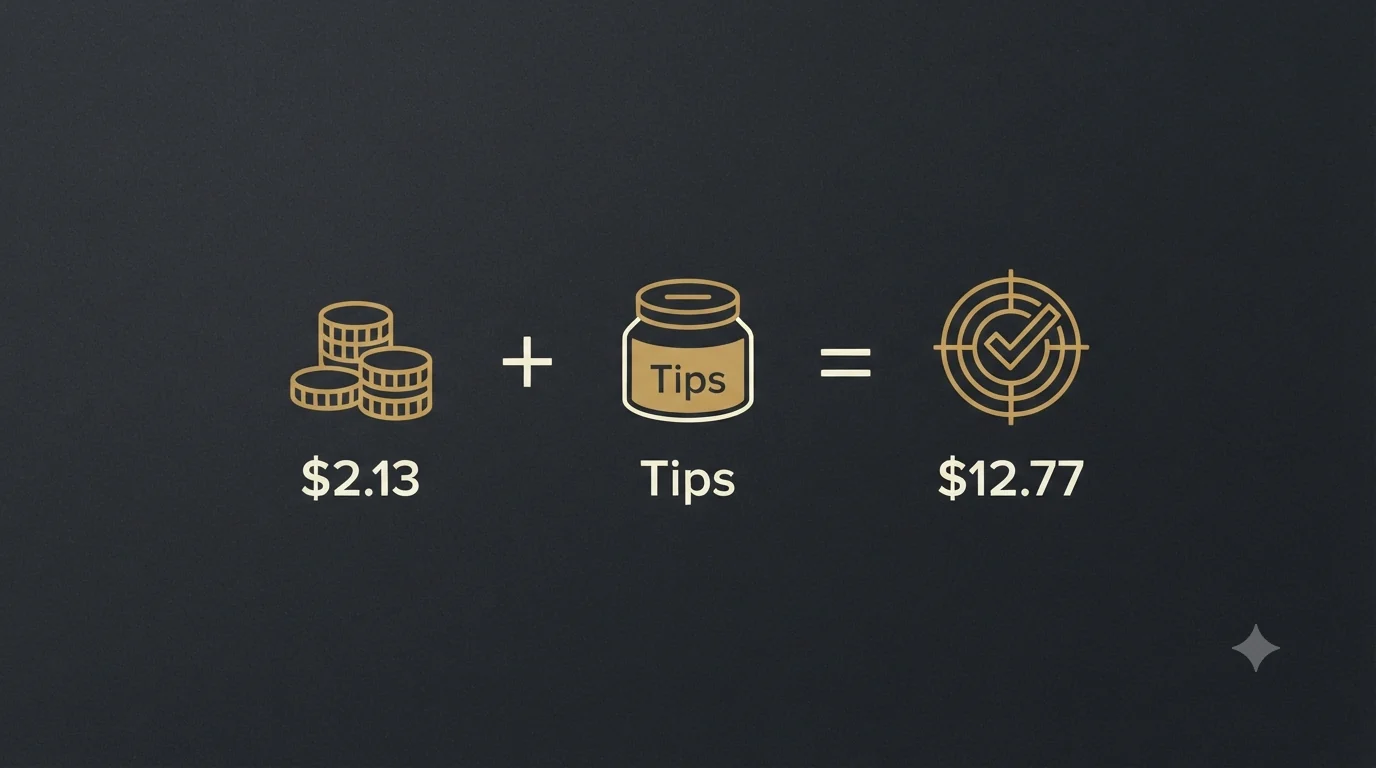
On January 1, 2026, Virginia’s minimum wage climbed to $12.77 an hour. Tipped employees follow the federal tip-credit setup: you can pay a cash wage as low as $2.13 an hour, provided tips carry each worker up to that full $12.77. Come up short in a pay period? You make up the difference. That’s a bookkeeping task, not a fingers-crossed one — log cash wages and reported tips side by side so you can prove it if the Virginia Department of Labor and Industry ever comes knocking.
Federal rules pile on too. Employees have to report tips, and bigger restaurants (more than 10 employees on an average day) file IRS Form 8027 every year. Skip the tip-reporting rules and you’re courting penalties — and skipping free money, because the FICA Tip Credit (Form 8846) hands back part of the payroll tax you pay on those tips.
The numbers that tell you if you’re making money
Tidy books only matter if you read them. These are the figures I pull up first.
Prime cost: your North Star
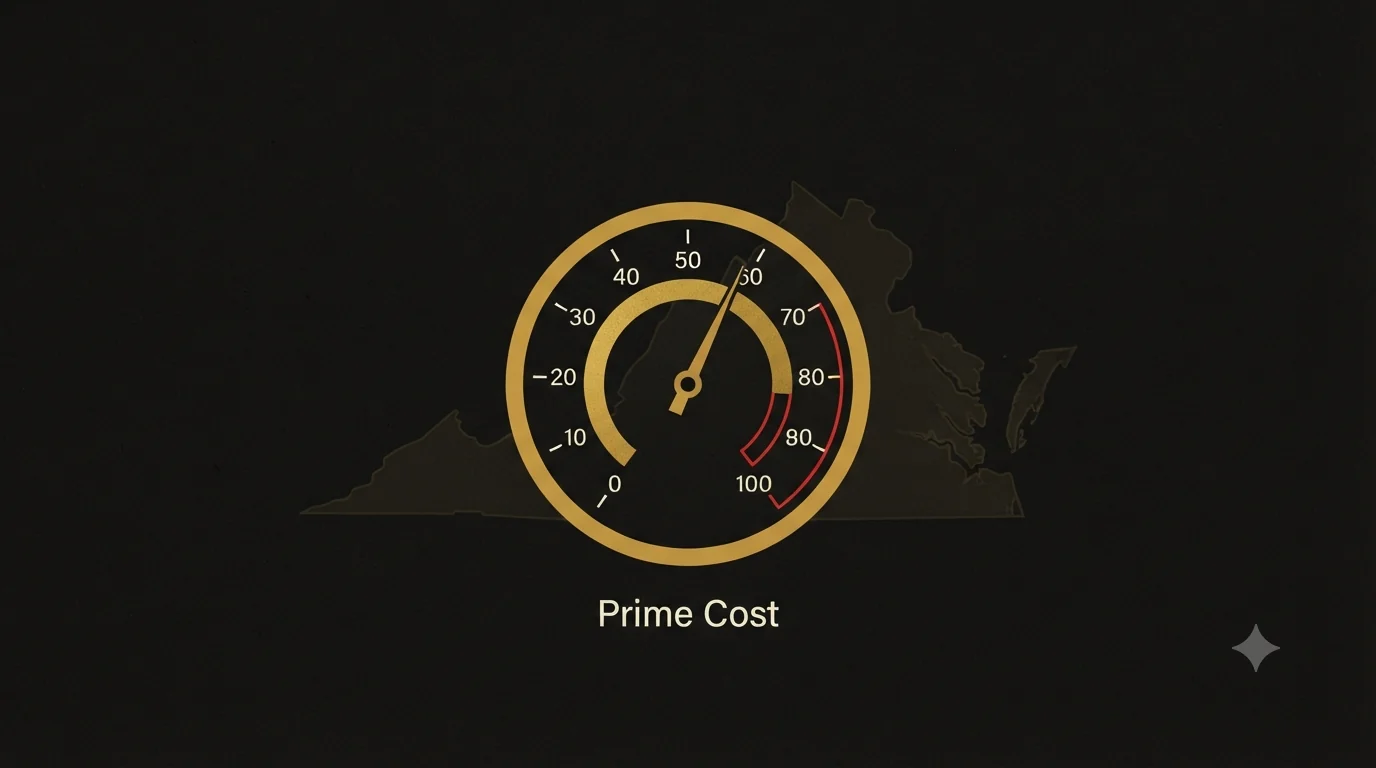
Prime cost is your cost of goods sold, food and beverage, plus total labor. It’s the number I care about most, because it wraps up the two costs you can actually move on any given shift. Aim to keep it at or under 60–65% of sales. Full-service spots usually push for the low end. Once prime cost drifts past 65%, profit gets slippery in a hurry.
Food and beverage cost percentage
Then split it out:
- Food: usually 28–35% of food sales
- Liquor: often 18–22%
- Beer and wine: higher, anywhere from 24% to 40% depending on your list
Now compare theoretical cost (what your recipes say you should be spending) against actual cost (what a physical count says you did). That gap is your waste, your heavy pours, and sometimes your theft.
Why many restaurants skip calendar months
Calendar months lie. February is short. Some months hand you five Fridays instead of four, which wrecks any weekend-to-weekend comparison. So plenty of operators run a 4-week period (13 a year) or a 4-4-5 calendar instead. Same number of weekends every period, and trends surface before they turn into problems.
Setting up your books the right way
Spend a little effort on structure now and save yourself hours later.
Start with a restaurant-specific chart of accounts. Split revenue into food, liquor, beer/wine, and catering. Split COGS into food and beverage. Break labor into front-of-house, back-of-house, and management. Lump it all into generic buckets and you bury the very insights you’re after.
Reconcile sales every day. Match the day’s POS Z-report to card deposits, cash, comps, voids, discounts, taxes collected, and tips. The restaurants that let this slide to weekly are the ones staring at unexplained gaps a month later.
Tie out three ways. POS sales should trace to processor deposits, and those should trace to the bank. That match is how you catch skimming, processing errors, and the bite delivery apps take.
Wire your POS into your accounting software. Set up right, it drops daily sales summaries straight into the books, so you’re reviewing numbers instead of re-keying them. This is where running QuickBooks for restaurants with a clean POS connection earns its cost.
Already behind, with months of mess, miscategorized entries, and nothing reconciled? That’s a normal place to start. A round of catch-up bookkeeping brings you current before you settle into the routine.
The benefits of getting it right
- You can finally see which menu items and which shifts actually earn.
- Sales tax, meals tax, and payroll go out on time, with no scramble and no penalties.
- Cash flow steadies, because you catch a food-cost creep before it eats the month.
- Your statements are ready when a lender asks, whether you’re refinancing or opening door number two.
- Tax season stops being a shock, since the records and the FICA Tip Credit are already sitting there.
Common mistakes restaurant owners make
- Treating meals tax like sales tax. Different filings, different agencies. Blur them and you underpay, then pay penalties on top.
- Booking only the net deposit. The deposit hides card fees, tips owed to staff, and refunds. Record gross sales first, deductions second.
- Skipping inventory. No counts means your COGS is a guess and your prime cost is fiction.
- Fumbling tips. Don’t track reported tips or confirm tipped staff clear $12.77 an hour, and you’ve got the IRS and the state both interested.
- One card for everything. Mixing personal and business spending turns reconciliation into a scavenger hunt and leaves you exposed in an audit.
- Putting it off. “I’ll catch up in the slow season” is how books pile up until the numbers can’t tell you anything.
Best practices for clean restaurant books
- Daily, weekly, monthly. Reconcile daily, review weekly, close monthly. Small and steady beats a quarterly panic.
- Hang on to records for at least three years. Virginia expects it for wage and sales records, and so does the IRS. Keep daily sales reports, tip records, tax filings, all of it.
- Split the duties. Whoever counts the cash shouldn’t be the one reconciling it. Even a tiny team benefits from a second set of eyes.
- Read prime cost weekly. Wait for the annual report to flag a problem and you’ve already lost a year of margin.
- Hand off the hard parts. Payroll tax and tip compliance are exactly where payroll services pay for themselves. Bookkeeping tracks the money; a CPA or specialist takes the filing positions.
Want to go deeper on the tax side? The Virginia Restaurant, Lodging & Travel Association (VRLTA) puts out solid research on the state’s meals and lodging taxes.
Why choose Numerawise Solutions
Anyone can key in transactions. Not many bookkeepers can actually read a restaurant P&L, or keep up with a Virginia meals-tax map that changes the moment you cross a city line. For us at Numerawise Solutions, restaurant bookkeeping in Virginia is the specialty, not an afterthought. We build restaurant-ready charts of accounts, connect your POS to QuickBooks, reconcile daily sales, and keep sales tax, local meals tax, and payroll filings on schedule. One café or a small group, our outsourced bookkeeping services hand you accurate numbers and give you back the hours you’d rather spend on the floor. We work with restaurants across Virginia remotely, so you get the specialized help without another salary on the books.
The bottom line
Good food fills the seats. Clean books keep the lights on. Restaurant bookkeeping in Virginia comes with a few extra layers: meals taxes that change by locality, tipped-wage math, and the daily reconciliation any busy kitchen demands. Stay on top of those and you’ll always know your prime cost, your cash position, and where you stand with the tax office before anyone asks.
Begin with the fundamentals. Reconcile daily, count your inventory, keep your taxes separate, and hold onto clean records. Once it outgrows what you can squeeze in between shifts, pass it to someone who speaks restaurant. Margins this thin can’t run on guesswork, and with the right system behind you, they won’t have to.
This article is general information, not legal or tax advice. Confirm current rates with the Virginia Department of Taxation, your local Commissioner of the Revenue, and a qualified professional.
Key takeaways
- Restaurant bookkeeping in Virginia juggles three tax layers: state and regional sales tax (5.3%–7%), a separate local meals tax, and tipped payroll taxes.
- The meals tax is a trust tax you send straight to your locality — never blend it with sales tax.
- Virginia’s 2026 minimum wage is $12.77/hour; tipped workers can start at $2.13/hour in cash as long as tips reach the full minimum.
- Prime cost (COGS + labor) is the metric that matters most. Aim for 60–65% of sales or better.
- Reconcile daily, count inventory often, and keep records for at least three years.
- Don’t leave the FICA Tip Credit (Form 8846) on the table — it refunds payroll tax paid on employee tips.
Quick answers.
What taxes do restaurants in Virginia have to pay?
Three, mainly. State and regional sales tax runs 5.3% to 7% depending on where you are. On top of that sits a local meals or food-and-beverage tax that shifts by city and county. Then there’s payroll tax on wages and tips. Sales tax goes to the state; the meals tax goes straight to your locality.
What is the meals tax in Virginia, and how is it different from sales tax?
It’s a separate local tax on prepared food and drink, charged on top of sales tax. Counties can levy up to 6%, and cities and towns set their own rates. The big difference: sales tax goes to the Virginia Department of Taxation, while the meals tax is a trust tax you remit directly to your locality, usually every month.
What should food cost be for a Virginia restaurant?
Food cost usually lands between 28% and 35% of food sales, though it swings by concept. The number that matters more is prime cost — food and beverage plus labor — which should stay at or below 60–65% of total sales. Check both weekly, not once a year, so rising costs don’t quietly erase your profit.
Do I have to pay tipped employees minimum wage in Virginia?
Virginia’s minimum wage is $12.77 an hour in 2026. You can pay tipped staff a cash wage as low as $2.13, but their tips plus that cash wage have to reach $12.77 in every pay period. If they fall short, you cover the gap. Track both numbers so you can prove you’re compliant.
How often should I reconcile my restaurant's books?
Daily for sales — match the POS report to card deposits, cash, comps, and tips. Then review weekly and close monthly. Busy restaurants that wait longer almost always turn up gaps they can’t trace back. Daily reconciliation is hands down the best habit for keeping restaurant books accurate.
Can I handle restaurant bookkeeping in Virginia myself?
When you’re small and disciplined, sure. But restaurant books get complicated fast: daily sales, tipped payroll, inventory, and layered taxes, all stacking up. Most owners start on their own and bring in a specialist once bookkeeping starts eating floor time or the numbers stop being something they trust.
Is QuickBooks good for restaurant bookkeeping?
It is, especially wired to your POS so daily sales flow in on their own. The trick is a restaurant-specific chart of accounts and correct tax mapping for both sales tax and meals tax. Set up that way, it turns what used to be hours of data entry into a couple of minutes of review.
What is prime cost, and why does it matter?
Prime cost is your total cost of goods sold plus total labor — the two costs you steer most directly. It’s the cleanest read on whether a restaurant actually makes money. Keep it at or below 60–65% of sales. Let it climb higher and your margin shrinks fast, no matter how packed the room looks.
What records do I need to keep for restaurant taxes in Virginia?
Hold onto daily sales reports, tip records, payroll records, inventory counts, and every tax filing for at least three years. Virginia requires it for wage and sales records, and the IRS wants the same. Well-kept records protect you if you’re ever audited and make filing a lot less painful.
What's the difference between catch-up bookkeeping and regular bookkeeping?
Catch-up bookkeeping cleans and reconciles months of backlog to get you current. Regular bookkeeping is the steady daily and monthly work that keeps everything accurate from there. Most restaurants that have fallen behind do a catch-up round first, then slide into an ongoing monthly rhythm.
Get a free scoping call.
Tell us what you’re working on. We respond same business day.

Ram · Founder & Principal
Founder of Numerawise Solutions, established MMXXIV in Atlanta. Intuit ProAdvisor Gold tier. Former Intuit Technical Support engineer. Has personally led two hundred accounting software conversions for US small businesses since founding the practice. Reachable directly at [email protected].
Free: The Clean-Cutover Checklist
The step-by-step checklist we use to migrate businesses to QuickBooks without losing data — bank rec, opening balances, payroll YTD, and the validation tie-out. Get it in your inbox.
No spam — just the checklist and the occasional QuickBooks tip.