Understanding bookkeeping costs for small business up front helps you budget and avoid surprise invoices. What moves the price is transaction volume, how many accounts you run, and whether payroll and sales tax are in the mix.
Numbers only help if you trust them. A profit-and-loss that doesn’t tie to the bank and a balance sheet nobody has reconciled aren’t reports — they’re guesses. Professional bookkeeping turns your file into something you can actually run the business on.
As a QuickBooks-focused firm, we handle small-business bookkeeping end to end — setup and cleanup, monthly reconciliation, and the reports that make tax season a handoff instead of a fire drill. You always know where you stand, and your CPA gets a file they can file from.
Bookkeeping Costs for Small Business: real price ranges
| Business size | Typical monthly cost | What drives it |
|---|---|---|
| Solo / very small | $200–$500 | Low volume, one account |
| Growing small business | $500–$1,200 | Payroll, AR/AP, multiple accounts |
| Established SMB | $1,000–$2,500+ | High volume, multi-entity, job costing |
| Catch-up / cleanup | Quoted per project | Months behind or messy data |
Hourly vs. flat monthly fee
Hourly help runs roughly $40–$100 an hour, but most established firms prefer a flat monthly fee so you know the cost up front. A full-time in-house bookkeeper costs far more once you add salary, benefits, payroll taxes, and software — which is why outsourced bookkeeping often wins on price.
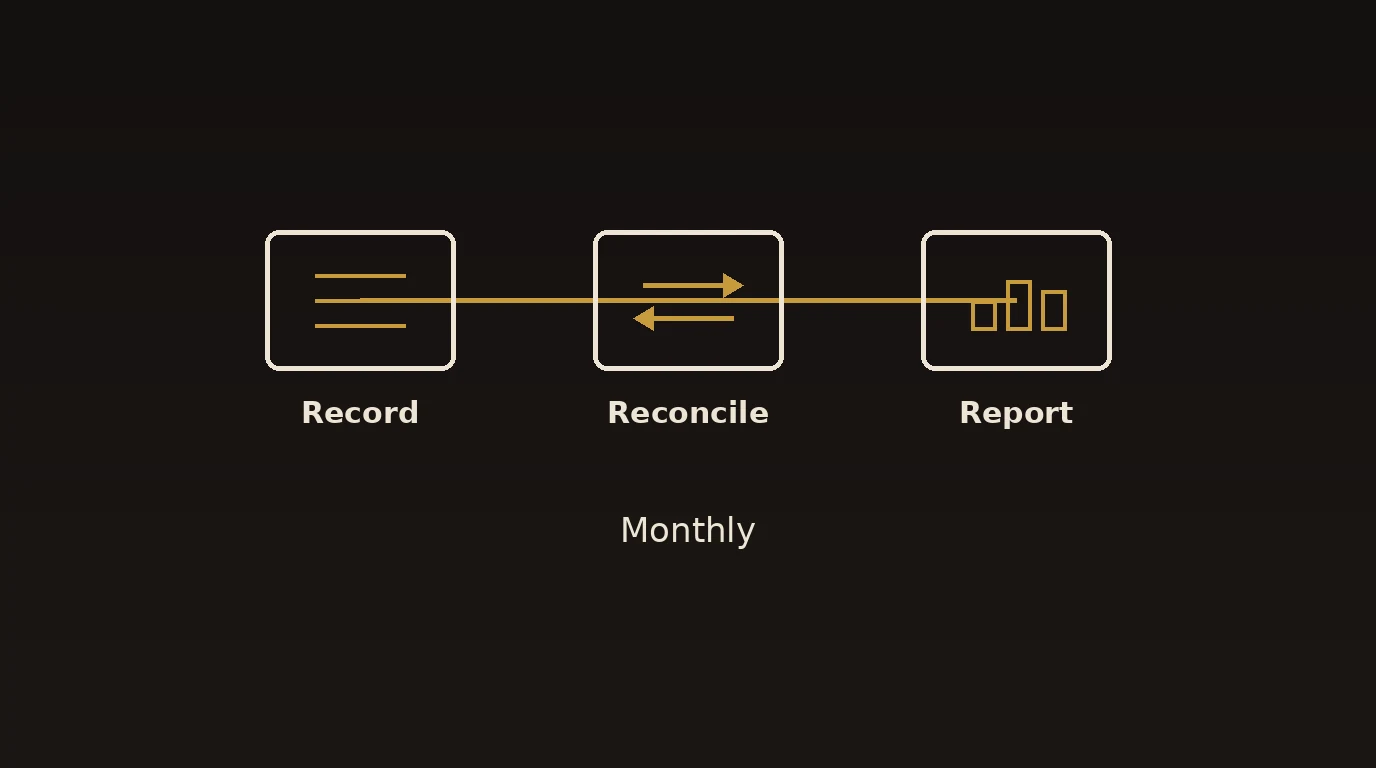
What drives the price
- Transaction volume — more activity means more to reconcile.
- Number of accounts — each bank and card adds work.
- Complexity — payroll, inventory, job costing, or multiple entities raise scope.
- Condition of your books — a cleanup costs extra before monthly work begins.
Benefits of paying for professional bookkeeping
- Clean books that lower your CPA bill.
- Fewer costly errors and missed deductions.
- Predictable monthly cost instead of surprise invoices.
- Time back to run the business.
Common mistakes to avoid
- Mixing personal and business spending. It muddies every report and weakens your LLC protection.
- Skipping monthly reconciliation. If the books don’t match the bank, they’re fiction.
- Guessing at expense categories. Wrong category, wrong tax — and buried deductions.
- Ignoring accounts receivable. Unpaid invoices are interest-free loans to your customers.
- Waiting until tax season. A year of catch-up costs far more than staying current.
- DIY-ing past your capacity. The mistake is white-knuckling it long after the business outgrew a spreadsheet.

Best practices that keep books clean
- Separate business and personal finances from day one.
- Reconcile every account monthly — bank, credit card, and loans.
- Use QuickBooks Online instead of manual spreadsheets, and connect your bank feeds.
- Review your profit and loss and balance sheet monthly, not just at tax time.
- Attach receipts to transactions so nothing is a mystery six months later.
- Set aside money for taxes every month, and close each period on a checklist.
Why choose Numerawise Solutions
At Numerawise Solutions, bookkeeping is the core of what we do — not a side service. We’re QuickBooks specialists who handle setup, cleanup, and full QuickBooks setup and migration, and we pair the books with payroll services and outsourced bookkeeping so one team covers your whole back office. You get accurate monthly reports, a real person who answers when you email, and books that stay ready for your CPA all year.
The bottom line
There’s no flat sticker price, and anyone who quotes one before looking at your file is guessing. The real answer to bookkeeping costs for small business comes from a quick review of your books. Clean books almost always cost less than the mistakes messy ones create.
Key takeaways
- Most small businesses pay $200–$2,500/month depending on complexity.
- Flat monthly pricing is easier to budget than hourly.
- Volume, accounts, and cleanup drive the cost most.
- Ask for a diagnostic before any quote.
Quick answers.
How much does bookkeeping cost for a small business?
Most small businesses pay between $200 and $2,500 per month, depending on transaction volume, number of accounts, and whether payroll and sales tax are included. Solo owners sit at the low end; higher-volume or multi-entity businesses pay more. A cleanup is priced separately, and a quick file review gives you an accurate number.
Is bookkeeping cheaper than hiring in-house?
Usually, yes. A full-time bookkeeper comes with salary, payroll taxes, benefits, and software, which can run several thousand dollars a month. Outsourcing gives you a whole team for a set monthly fee plus coverage when someone’s out — without the overhead of another employee.
Should I pay hourly or a flat monthly fee?
Flat monthly pricing is easier to plan around and is what most established firms offer. Hourly help works for one-off projects, but a surprise hourly invoice is harder to budget. Ask exactly what’s included so you can compare fairly.
Why does a cleanup cost extra?
A cleanup fixes months of miscoded, unreconciled records before ongoing work can start. It’s priced by scope because the effort depends on how far behind and how messy the file is. Once you’re current, monthly service is far cheaper than repeated cleanups.
What’s included in a monthly bookkeeping fee?
Typically transaction recording, monthly bank and credit card reconciliation, and financial reports (profit and loss, balance sheet, cash flow). Payroll, sales tax filing, and AP/AR are often add-ons. Confirm the exact scope so the fee matches the work you actually need.
Does more revenue always mean higher bookkeeping cost?
Not directly — it’s transaction volume and complexity that drive cost, not revenue alone. A high-revenue business with a few large invoices can be cheaper to keep than a low-revenue shop with hundreds of small transactions and multiple accounts.
How do I get an accurate bookkeeping quote?
Share recent bank and card statements and access to your accounting file. A provider reviews the volume, number of accounts, and condition of the data, then quotes a flat monthly fee. Skip the ballpark numbers online — a real quote is tied to your actual books.
Can I lower my bookkeeping cost?
Yes. Keep business and personal spending separate, connect your bank feeds, and stay current so nothing turns into a cleanup. Clean inputs make clean books, which keeps your monthly fee lower and your reports accurate.
Get a free scoping call.
Tell us what you’re working on. We respond same business day.

Ram · Founder & Principal
Founder of Numerawise Solutions, established MMXXIV in Atlanta. Intuit ProAdvisor Gold tier. Former Intuit Technical Support engineer. Has personally led two hundred accounting software conversions for US small businesses since founding the practice. Reachable directly at [email protected].
Free: The Clean-Cutover Checklist
The step-by-step checklist we use to migrate businesses to QuickBooks without losing data — bank rec, opening balances, payroll YTD, and the validation tie-out. Get it in your inbox.
No spam — just the checklist and the occasional QuickBooks tip.