I’ve cleaned up enough shoebox-and-spreadsheet messes to know exactly how they happen. A busy stretch hits, invoices go out, receipts pile up in the truck, and three months later nobody can say where the cash went. This guide walks through what good bookkeeping looks like here in Cornelius, what it should cost, the mistakes that hurt owners most, and how to keep records that stay ready for your CPA all year.
What bookkeeping for small business Cornelius NC owners actually covers
Bookkeeping is the day-to-day work of recording, sorting, and reconciling every dollar your business touches. People confuse it with tax prep, but they’re different jobs. Bookkeeping is the steady record all year; your CPA uses that record to file. Get the first part right and the second gets cheaper.
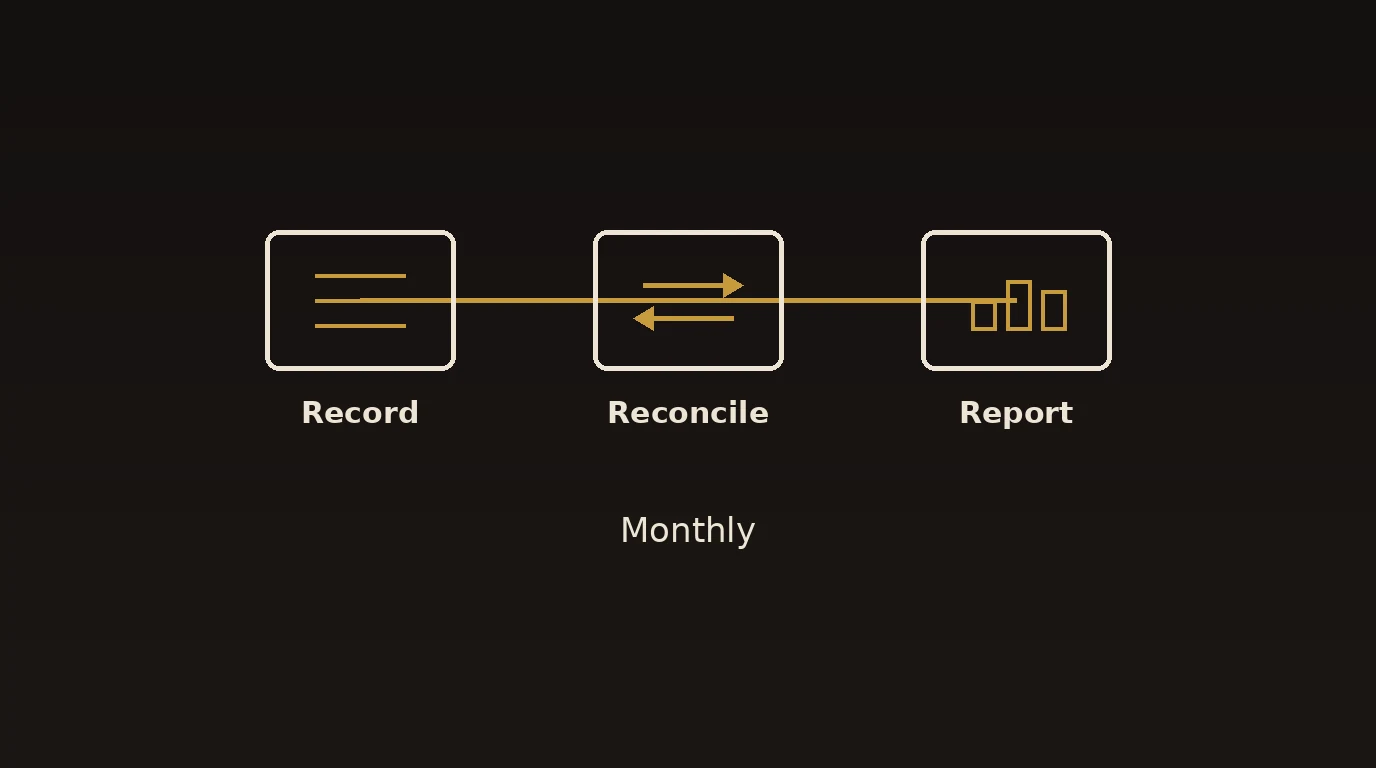
A full monthly engagement in Cornelius usually includes:
- Recording and categorizing income and expenses
- Reconciling every bank and credit card account each month
- Tracking who owes you (A/R) and what you owe (A/P)
- Keeping sales tax organized and remitted on time
- Supporting payroll so filings go out when they should
- Monthly profit & loss, balance sheet, and cash-flow reports
- Catch-up work when you’ve fallen a few months behind
If you already run QuickBooks, most of this plugs straight in. If you don’t, moving to a clean setup through our QuickBooks setup and cleanup is usually step one. And when the work outgrows your evenings, our bookkeeping services pick it up entirely.
What it costs around Lake Norman
There’s no single sticker price, and anyone who quotes one before seeing your file is guessing. Cost tracks three things: how many transactions you run, how many accounts you have, and whether payroll and sales tax are in the mix. Here’s the range most Cornelius businesses land in:
| Business profile | Typical monthly fee | What drives it |
|---|---|---|
| Solo / very small | $200–$500 | Low volume, one or two accounts |
| Growing small business | $500–$1,200 | Payroll, A/R and A/P, multiple accounts |
| Established operation | $1,000–$2,500+ | High volume, job costing, multiple entities |
| Catch-up / cleanup | Quoted per project | Months behind or messy data |
Compare that to hiring in-house. A full-time bookkeeper on the Charlotte-area market runs a real salary plus payroll taxes, benefits, and software before they’ve reconciled a single account. For most small businesses, outsourced bookkeeping delivers a whole team for a fraction of that — and no gap when someone takes PTO.
The Cornelius tax details that trip owners up
Being local matters because the tax map here shifts under your feet. Two 2026 changes are worth knowing:
- Sales tax went up. Effective July 1, 2026, Mecklenburg County added 1%, pushing the combined rate in Cornelius from 7.25% to 8.25%. If your point-of-sale or invoices still charge the old rate, you’re under-collecting and will owe the difference.
- State income tax dropped. North Carolina’s flat individual rate fell to 3.99% on January 1, 2026, down from 4.25%. That flows through to most small-business owners who report profit on their personal return.
You can confirm current figures directly with the North Carolina Department of Revenue (NCDOR). The point isn’t to memorize rates — it’s to make sure whoever keeps your books is watching them so a rate change doesn’t quietly become a penalty.
DIY vs. professional bookkeeping
Plenty of owners start out doing their own books, and for a brand-new, simple business that’s fine. The question is when the trade stops being worth it.
| Factor | Doing it yourself | Professional |
|---|---|---|
| Your time | 5–20+ hours a month | A short monthly review |
| Accuracy | Depends on your experience | Reconciled and consistent |
| Tax readiness | A year-end scramble | Ready to file anytime |
| Real cost | “Free,” minus your time | A predictable monthly fee |
Benefits of professional bookkeeping
- You get your evenings back. Owners routinely reclaim 5–15 hours a month.
- Your numbers turn into decisions. Accurate reports show which jobs and services actually earn.
- Tax season stops being scary. Clean books mean a handoff, not a fire drill.
- Cash flow gets predictable. You see a slow month coming instead of feeling it.
- You look ready for lenders. A bank or the SBA wants reconciled financials, not a shoebox.
Common mistakes to avoid
- Mixing personal and business money. One shared card muddies every report and weakens your LLC protection. Open a dedicated business account on day one.
- Skipping monthly reconciliation. If the books don’t match the bank, they’re fiction. I once found a lake-service shop double-paying a vendor for months — a five-minute reconciliation would have caught it.
- Guessing at categories. Wrong category, wrong tax, and buried deductions.
- Treating sales tax as income. That money belongs to the state. Booked as revenue, it inflates your profit and sets up a nasty surprise.
- Ignoring receivables. Unpaid invoices are interest-free loans to your customers. Chase them.
- Waiting until April. A year of catch-up always costs more than staying current.
Best practices that keep books clean
- Separate business and personal finances from the start.
- Reconcile every account monthly — bank, credit card, and loans.
- Use QuickBooks Online with connected bank feeds instead of manual spreadsheets.
- Review your P&L and balance sheet every month, not just at tax time.
- Snap and attach receipts to transactions so nothing is a mystery later. The IRS accepts digital copies.
- Set aside tax money monthly, and close each period on a simple checklist.
Why choose Numerawise Solutions
At Numerawise Solutions, bookkeeping is the core of what we do — not a side service. We’re QuickBooks specialists who handle setup, cleanup, and ongoing QuickBooks setup and cleanup, and we pair the books with payroll services and outsourced bookkeeping so one team covers your whole back office. You get accurate monthly reports, a real person who answers when you email, and records that stay filing-ready for your CPA all year. We work with Cornelius and Lake Norman businesses remotely through secure cloud tools, so “local” means someone who knows Mecklenburg’s rules — not someone you have to drive to.
The bottom line on bookkeeping for small business Cornelius NC
Good books aren’t complicated — they’re consistent. Separate your accounts, reconcile every month, keep an eye on those 2026 tax changes, and hand off the busywork the day it starts eating hours you owe your customers. Handled well, bookkeeping for small business Cornelius NC owners can trust becomes the quiet system that tells you what’s working, what isn’t, and what you can afford next — instead of a shoebox you dread every spring.
Key takeaways
- Bookkeeping covers recording, reconciliation, reporting, and often payroll and sales tax.
- Most Cornelius small businesses pay $200–$2,500 a month depending on volume and complexity.
- Cornelius’s combined sales tax rose to 8.25% on July 1, 2026; NC income tax dropped to 3.99%.
- Reconcile monthly, keep personal and business separate, and never book sales tax as income.
- Outsourcing usually costs less than the hours and mistakes it replaces.
Quick answers.
How much does bookkeeping for a small business in Cornelius, NC cost?
Most Cornelius small businesses pay a flat monthly fee between $200 and $2,500, based on transaction volume, number of accounts, and whether payroll and sales tax are included. Solo owners sit at the low end; higher-volume or multi-entity businesses pay more. A quick review of your books gives you a real number instead of a ballpark.
What’s the difference between a bookkeeper and a CPA?
A bookkeeper handles the day-to-day: recording transactions, reconciling accounts, and producing monthly reports. A CPA uses those records to file taxes and advise on strategy. Most businesses use both. Clean bookkeeping actually lowers your CPA bill, because your accountant spends time advising instead of fixing your file first.
Do I still need a bookkeeper if I use QuickBooks?
Yes. QuickBooks is a tool, not a bookkeeper — it records what you tell it, mistakes included. It still needs someone to categorize transactions, reconcile accounts, and catch errors before they snowball. Good software plus a skilled hand is what produces books you can actually make decisions from.
What is the Cornelius, NC sales tax rate right now?
As of July 1, 2026, the combined sales tax rate in Cornelius is 8.25% — up from 7.25% after Mecklenburg County added a 1% local rate. Make sure your point-of-sale and invoices reflect the new rate so you don’t under-collect. Always confirm the current figure with the NCDOR.
How often should my books be reconciled?
Monthly, at a minimum, so your records match every bank and card statement. Busy or high-volume businesses often benefit from weekly updates. Staying current beats a year-end catch-up, which almost always means more errors, more stress, and a higher cleanup bill.
Can you help if I’m several months behind?
Absolutely — catch-up work is one of the most common requests we get. We reconstruct the missing months, reconcile the accounts, and get you current and tax-ready, then set an ongoing routine so you don’t fall behind again. Cleanup is quoted by scope, based on how far behind and how messy the file is.
Is remote bookkeeping safe for a Cornelius business?
Yes, and most modern bookkeeping works this way. With cloud accounting and secure, read-only bank feeds, your bookkeeper manages everything without setting foot in your office. Look for encrypted platforms, limited access, and a signed confidentiality agreement, and you get the same accuracy as an in-house hire with less overhead.
When should a small business hire a bookkeeper?
Bring one in when the books consistently fall behind, when your profit and loss doesn’t match your bank balance, when tax season is a scramble, or when data entry is eating hours you should spend selling. If two of those sound familiar, a bookkeeper usually pays for itself.
How do I switch bookkeepers without losing my data?
It’s easier than most owners expect. A good provider reviews your existing QuickBooks file, cleans up any errors, and picks up where the last person left off. Your accounting data stays intact and moves with you, so there’s no starting over and no lost history.
Get a free scoping call.
Tell us what you’re working on. We respond same business day.

Ram · Founder & Principal
Founder of Numerawise Solutions, established MMXXIV in Atlanta. Intuit ProAdvisor Gold tier. Former Intuit Technical Support engineer. Has personally led two hundred accounting software conversions for US small businesses since founding the practice. Reachable directly at [email protected].
Free: The Clean-Cutover Checklist
The step-by-step checklist we use to migrate businesses to QuickBooks without losing data — bank rec, opening balances, payroll YTD, and the validation tie-out. Get it in your inbox.
No spam — just the checklist and the occasional QuickBooks tip.