California is not a hard place to run a business, but it is an unforgiving place to run one with messy books. The state has more filing touchpoints than most, and the penalties arrive quickly.
Whether you are a contractor in Sacramento, an ecommerce seller in Los Angeles, or a consultancy in the Bay Area, the fix is the same: a steady monthly rhythm handled by someone who knows which California agency wants what, and when.
What California online bookkeepers for small businesses actually do
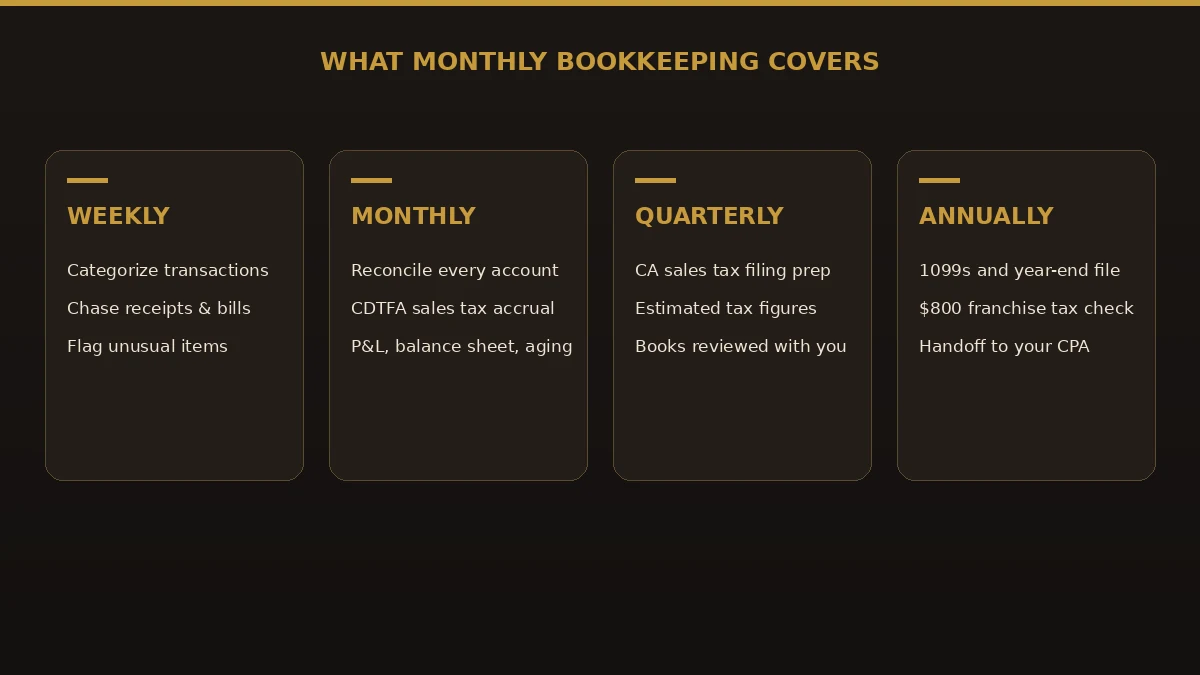
Bookkeeping is a repeating monthly cycle, not an annual tidy-up. A proper service covers:
- Transaction categorization. Every bank and card transaction coded correctly, weekly rather than annually.
- Account reconciliation. Bank, credit card, and loan accounts tied out monthly, so balances are real.
- Accounts receivable and payable. Who owes you, what you owe, and what is overdue.
- CDTFA sales tax tracking. Recorded as a liability and prepared for filing — never as income.
- Payroll journals. Wages, taxes, and EDD obligations posted correctly each run.
- Monthly reports. Profit and loss, balance sheet, and aging reports on a set schedule.
California tax details that trip small business owners up
This is where local knowledge earns its fee. A few things worth watching in 2026:
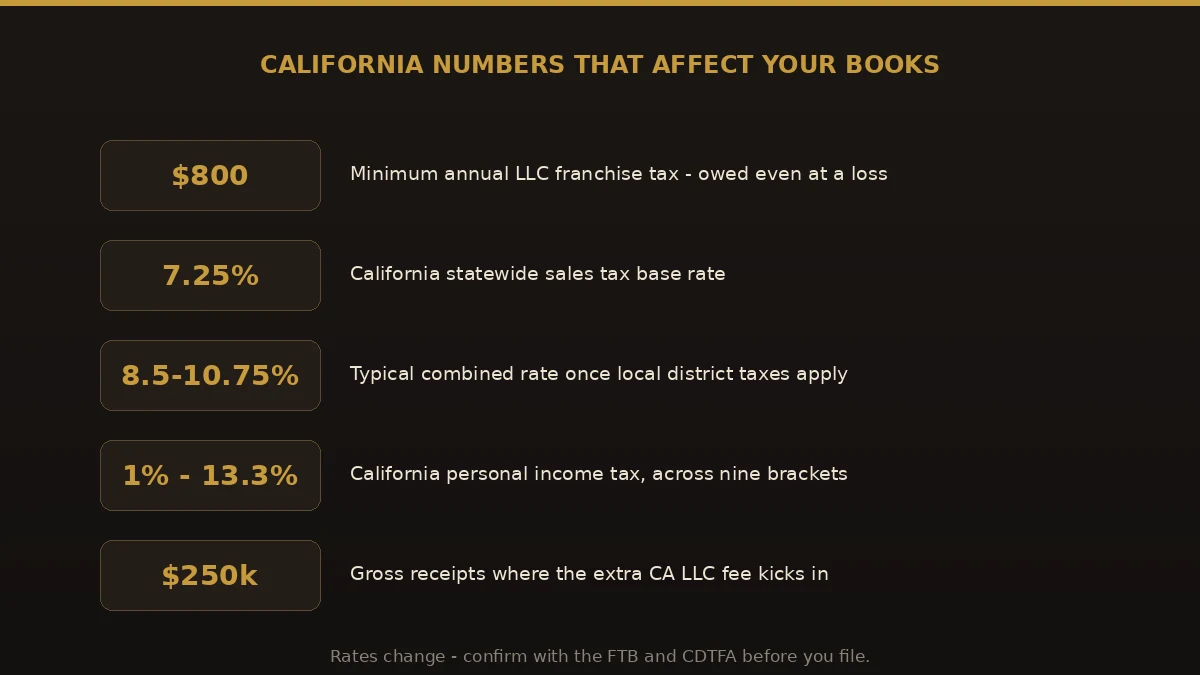
- The $800 minimum franchise tax. Most California LLCs and corporations owe at least $800 a year to the Franchise Tax Board, whether the business made money or not. Owners who had a loss year are the ones most often caught out.
- Sales tax varies by district. California’s base rate is 7.25%, but local district taxes typically push the combined rate to somewhere between 8.5% and 10.75%. Your rate depends on the address, not just the city.
- Income tax is steeply graduated. California runs nine brackets, from 1% up to 13.3% at the top (12.3% plus a 1% mental health surcharge on income over $1 million). Pass-through profit is taxed on your personal return.
- Three agencies, not one. The FTB handles income and franchise tax, the CDTFA handles sales and use tax, and the EDD handles payroll. Missing one is the classic California mistake.
The California LLC gross receipts fee
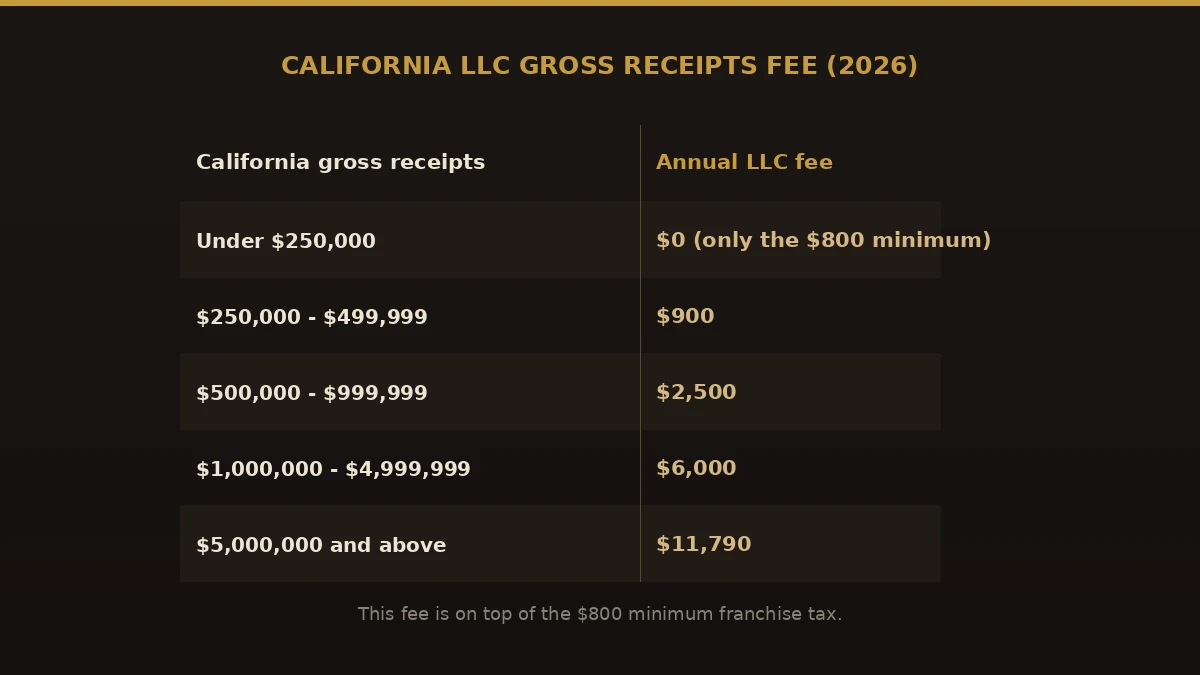
This one surprises growing businesses. On top of the $800 minimum, California LLCs owe an additional fee once California gross receipts pass $250,000:
| California gross receipts | Annual LLC fee |
|---|---|
| Under $250,000 | $0 (just the $800 minimum) |
| $250,000 – $499,999 | $900 |
| $500,000 – $999,999 | $2,500 |
| $1,000,000 – $4,999,999 | $6,000 |
| $5,000,000 and above | $11,790 |
Because the fee is based on gross receipts rather than profit, a business can cross a tier while barely breaking even. Clean books let you see that coming instead of meeting it at filing time. Confirm current figures with the California Franchise Tax Board and CDTFA before you file.
What online bookkeeping costs in California
Pricing tracks volume and complexity, not your zip code. Typical flat monthly fees:
| Business profile | Monthly volume | Typical monthly fee |
|---|---|---|
| Solo or side business | Under 100 transactions | $200 – $400 |
| Established small business | 100 – 300 transactions | $400 – $900 |
| With payroll and sales tax | 300 – 600 transactions | $900 – $1,600 |
| Multi-entity or high volume | 600+ transactions | $1,600 – $2,500+ |
Working with an online bookkeeper usually costs less than a local firm carrying California office overheads — and it widens your choice well beyond whoever happens to be nearby.
Benefits of using an online bookkeeper in California
- Filing deadlines stop sneaking up. FTB, CDTFA, and EDD dates are tracked, not remembered.
- You can price with confidence. Real margins per job or product, not guesswork.
- Tax season stops being a crisis. Your CPA gets a clean file and can focus on planning.
- Financing gets easier. Lenders and the SBA want current statements.
- Lower cost, wider choice. No California office overhead priced into your monthly fee.
Common mistakes to avoid
- Forgetting the $800 in a loss year. It is owed regardless of profit, and penalties compound.
- Using one sales tax rate everywhere. California district rates vary by address; assuming one rate creates real liability.
- Booking sales tax as income. It inflates revenue and leaves you short at filing time.
- Mixing personal and business accounts. It muddies every report and weakens liability protection.
- Waiting until March. Twelve months of catch-up always costs more than twelve monthly closes.
Best practices that keep California books clean
- Separate accounts from day one. A dedicated business checking account and card.
- Reconcile monthly, without exception. Short monthly closes beat annual reconstruction.
- Set sales tax aside. Move CDTFA money out of operating cash so it is there when due.
- Budget for the $800 and the LLC fee. Accrue them monthly instead of absorbing a lump sum.
- Confirm your district rate. Check the rate for your actual business or delivery address.
Why choose Numerawise Solutions
We are an accounting firm built around QuickBooks and clean monthly books. As California online bookkeepers for small businesses, we work remotely inside your own QuickBooks file, so you keep full ownership and access at all times. You get a flat monthly fee scoped after a real review, a named person who knows your business, and reports that arrive on schedule. If you are behind, we quote the catch-up separately and tell you plainly what it will take. Alongside monthly bookkeeping services, we handle payroll, QuickBooks setup and cleanup, and outsourced accounting.
The bottom line
California asks more of small businesses than most states: three agencies, district-level sales tax, a top income rate of 13.3%, and an $800 bill that arrives whether you profited or not. Working with California online bookkeepers for small businesses keeps your accounts reconciled, your CDTFA liability tracked, and your reports arriving monthly, so those obligations are planned for rather than discovered. Reconcile every month, keep personal and business separate, never book sales tax as revenue, and accrue the franchise tax as you go. Get that rhythm right and California becomes manageable.
Key takeaways
- California online bookkeepers for small businesses handle categorization, reconciliation, AR/AP, CDTFA sales tax, payroll, and monthly reports.
- Most California small businesses pay $200–$2,500 a month, based on volume and complexity.
- Budget for the $800 minimum franchise tax plus the LLC gross receipts fee once you pass $250,000.
- Sales tax runs 7.25% base and typically 8.5–10.75% combined, and it varies by address — not just city.
Quick answers.
What do California online bookkeepers for small businesses do?
They handle your monthly books remotely: categorizing transactions, reconciling bank and credit card accounts, tracking accounts receivable and payable, recording CDTFA sales tax as a liability, posting payroll journals, and delivering monthly reports. The work happens in cloud accounting software, so you get the same service without needing a bookkeeper in your city.
How much does online bookkeeping cost in California?
Most California small businesses pay a flat monthly fee between $200 and $2,500, depending on transaction volume, number of accounts, and whether payroll and sales tax are included. Online bookkeepers usually cost less than local California firms because there is no office overhead priced into the fee. Catch-up work is quoted separately.
Do I have to pay the $800 California franchise tax if my business lost money?
Generally yes. Most California LLCs and corporations owe the $800 minimum annual franchise tax to the Franchise Tax Board regardless of profit or loss. This catches many owners out after a bad year. A good bookkeeper accrues it monthly so the payment is planned for rather than a surprise. Confirm your situation with the FTB or your CPA.
What is the California LLC gross receipts fee?
It is an extra annual fee on top of the $800 minimum, based on California gross receipts. In 2026 it runs $900 for receipts of $250,000 to $499,999, $2,500 up to $999,999, $6,000 up to $4,999,999, and $11,790 at $5 million or more. Because it tracks receipts rather than profit, you can owe it in a low-margin year.
What is the sales tax rate for a California small business?
California charges a 7.25% statewide base rate, and local district taxes typically bring the combined rate to between 8.5% and 10.75%. The exact rate depends on your specific business or delivery address rather than just the city, so confirm it with the CDTFA rather than assuming a single rate across California.
Is an online bookkeeper as good as a local California one?
For most small businesses, yes. The work happens in cloud accounting software, bank feeds come in automatically, and reviews happen on video calls. A local bookkeeper helps most if your business is cash-heavy or paper-based. Otherwise, hiring online widens your choice of specialists and usually lowers your monthly cost.
Which California agencies do I need to file with?
Usually three. The Franchise Tax Board handles income and franchise tax, the CDTFA handles sales and use tax, and the EDD handles payroll and employment taxes. Missing one is the most common California compliance mistake, which is why the filing calendar matters as much as the bookkeeping itself.
Can you help if my California books are months behind?
Yes. Catch-up bookkeeping is common and fixable. We scope it by how many months are open and how far off the reconciliations are, then quote it separately from your monthly fee. Once the backlog is cleared, we move you onto a monthly rhythm so it does not build up again.
Is it safe to share my financial data with a remote bookkeeper?
Yes, when handled properly. Look for named user access to your own accounting file rather than shared logins, secure document upload instead of email attachments, and a clear answer on who can see your data. You should keep ownership of the file and be able to see exactly what changed and when.
Get a free scoping call.
Tell us what you’re working on. We respond same business day.

Ram · Founder & Principal
Founder of Numerawise Solutions, established MMXXIV in Atlanta. Intuit ProAdvisor Gold tier. Former Intuit Technical Support engineer. Has personally led two hundred accounting software conversions for US small businesses since founding the practice. Reachable directly at [email protected].
Free: The Clean-Cutover Checklist
The step-by-step checklist we use to migrate businesses to QuickBooks without losing data — bank rec, opening balances, payroll YTD, and the validation tie-out. Get it in your inbox.
No spam — just the checklist and the occasional QuickBooks tip.