Dallas grows fast, and fast growth is exactly when the books slip. From Deep Ellum studios to distributors in the northern suburbs, the crews and orders pile up long before anyone stops to reconcile.
Dallas is a booming metro of construction, professional services, and small manufacturers, and every one of them runs on numbers it can trust. Whether you’re coming off Sage, Xero, FreshBooks, spreadsheets, or an older QuickBooks file, a planned QuickBooks migration in Dallas, TX protects your data instead of scrambling it.
QuickBooks migration for Dallas, TX businesses
Dallas keeps adding construction crews, wholesale distributors, professional firms, and tech startups from Deep Ellum to the northern suburbs. Fast growth is great for revenue and rough on bookkeeping if nobody keeps up.
When we move a Dallas, TX business to QuickBooks, we set the file up around how it actually earns — job costing for contractors, inventory for product and distribution businesses, and class or location tracking for multi-site operations. The local operators we migrate most often:
- Construction and contractors
- Wholesale and distribution
- Professional services
- Retail and e-commerce
- Tech and startups
What a QuickBooks migration in Dallas, TX involves
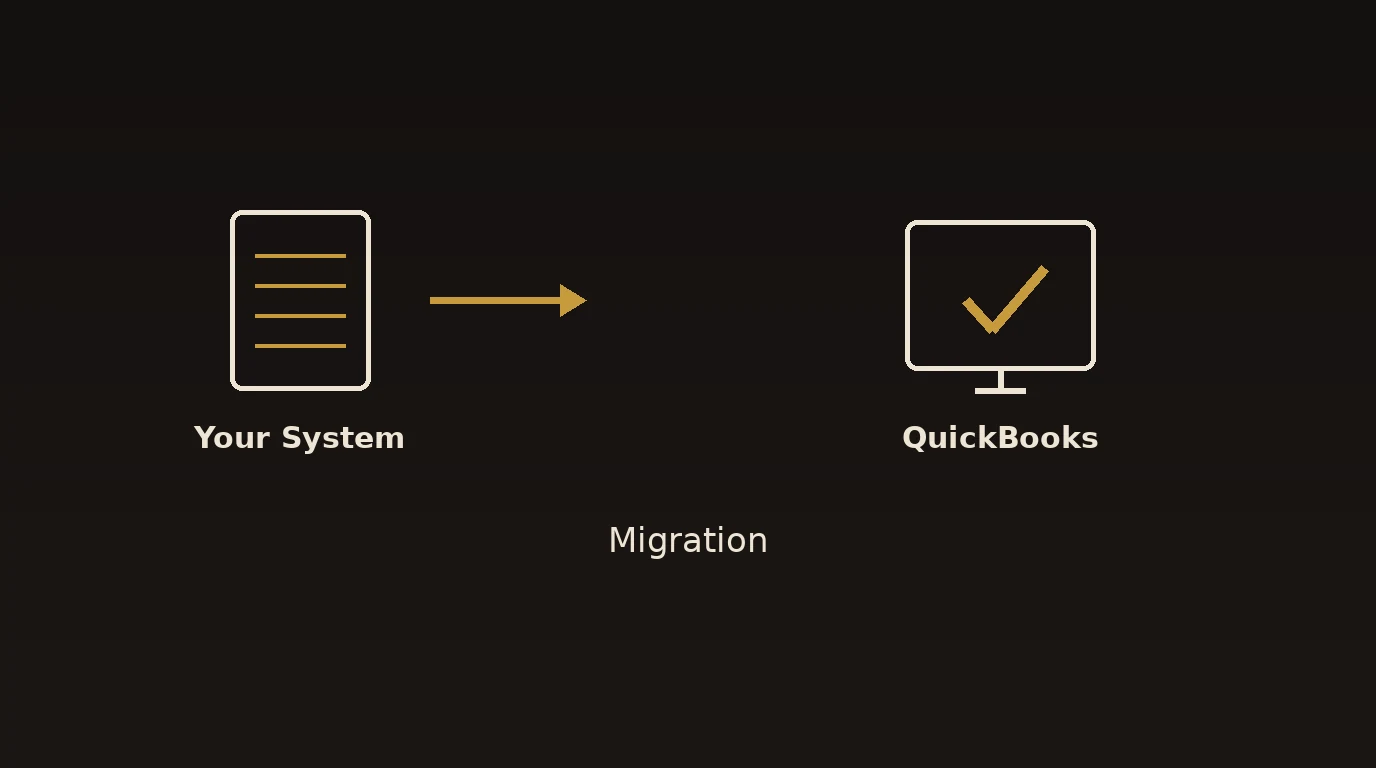
There’s no single button that scoops your data out of one system and drops it perfectly into QuickBooks. A real migration is three careful moves: pull clean data out of your current software, map every field to its home in QuickBooks, and import it in an order that keeps everything linked. Then you prove the numbers tie out before anyone relies on them.
| Usually transfers | Usually rebuilt by hand |
|---|---|
| Chart of accounts and balances | Payroll year-to-date totals and pay items |
| Customers and vendors | Fixed assets and depreciation schedules |
| Open invoices (A/R) and bills (A/P) | Budgets and memorized transactions |
| Item and inventory lists | Bank reconciliation history |
| General ledger and trial balance | Custom reports and attachments |
How we run the migration
- Assess and plan. We review your current file, pick the right QuickBooks edition (Online or Enterprise), and lock a clean cutoff date.
- Clean up first. Reconcile accounts and merge duplicate names so we migrate good data, not a mess.
- Export and map. Match every account and list to the correct QuickBooks field.
- Import in order. Lists first, then opening balances, then transactions.
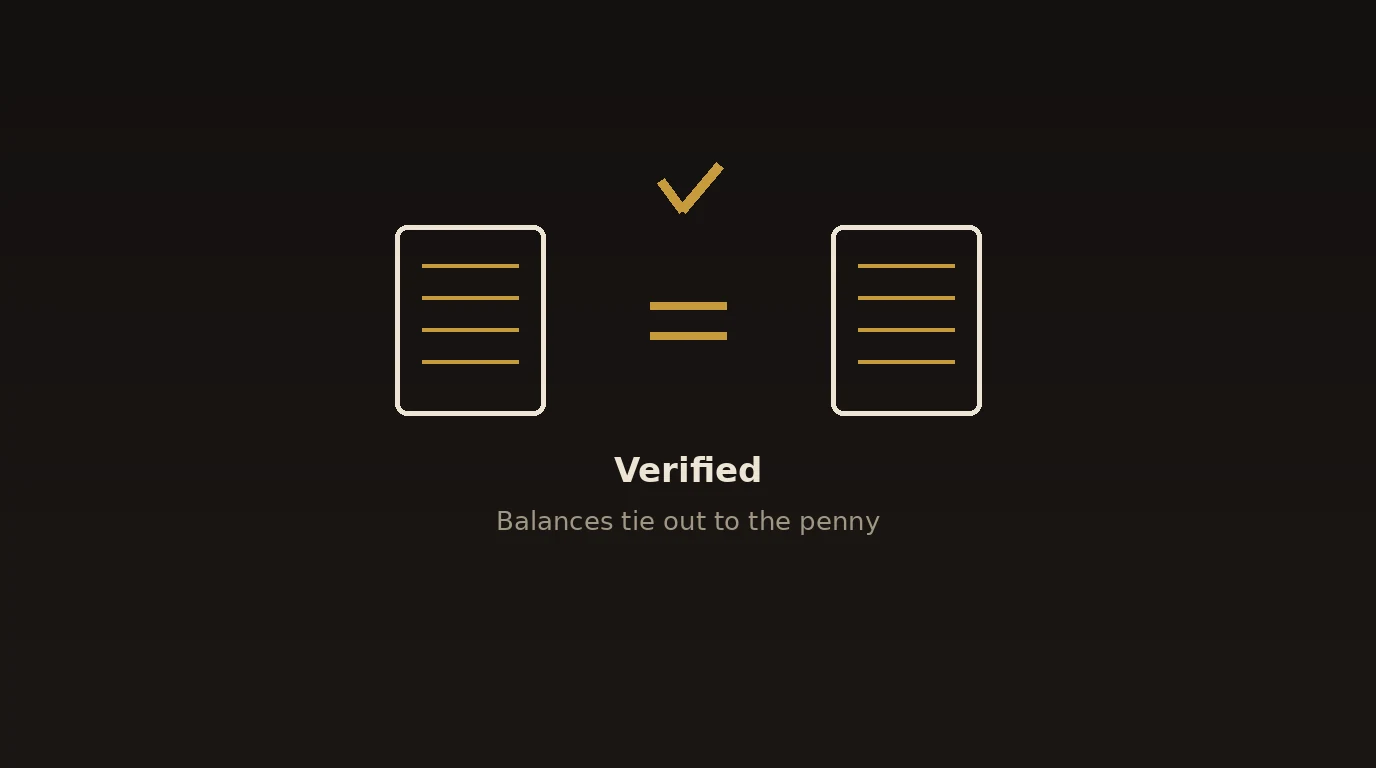
- Reconcile and verify. We match the trial balance and aging reports against your old system to the penny.
- Train and go live. Your team learns the new file, and the old system stays read-only for reference.
Why Dallas businesses move to QuickBooks
- Easier hiring. Far more bookkeepers in Texas know QuickBooks than any other platform.
- A familiar interface your team learns in days, not months.
- Room to grow with QuickBooks Enterprise or the flexibility of QuickBooks Online.
- A huge ecosystem of payroll, payments, and add-ons.
Texas charges no state income tax, but the state’s franchise (margin) tax and a 6.25% sales tax plus local rates still shape your books. Getting the numbers right in the migration keeps your first Texas filing clean.
A Dallas wholesale distributor we work with was quietly overpaying two vendors on duplicate bills. Monthly reconciliation caught it — that alone more than covered the bookkeeping fee.
Common migration mistakes to avoid
- Skipping the cleanup and importing duplicates and unreconciled accounts.
- Hauling over years of raw history that bloats the file — summarize what you don’t need in detail.
- Importing transactions before lists and balances, which breaks the links.
- Assuming payroll year-to-date comes across — it doesn’t; plan to rebuild it.
- Skipping the reconcile-and-verify step, so you find errors at tax time.
- Deleting the old file too soon — keep it read-only through a full close.
A contractor near the Tollway expensed a $14,000 skid steer as “supplies.” That one miscode threw off both the P&L and the tax return until we fixed it.
Best practices for a smooth switch
- Convert at a clean cutoff — month-end or, better, fiscal year-end.
- Save your key reports first as your reference set.
- Pick the right QuickBooks edition before you import anything.
- Test with a sample batch before the full load.
- Document your account mapping so a number you question later is easy to trace.
- Bring in a specialist early for payroll and job costing.
Why choose Numerawise Solutions
At Numerawise Solutions, software conversions are core to what we do — not a side gig. We handle QuickBooks migrations for businesses in Dallas, TX and nationwide, cleaning the source file, mapping the chart of accounts, rebuilding payroll and fixed assets, and reconciling until your financials match. Our QuickBooks conversion services include a verification pass and a short parallel run, and our ongoing bookkeeping keeps the new file accurate after go-live.
The bottom line
A QuickBooks migration in Dallas, TX is very doable when you treat it as a project, not a button. Clean the data, map it carefully, import in order, and verify every balance before you rely on it. Do that and your first close in QuickBooks feels like any other month — which is exactly the goal.
No state income tax helps, but Dallas businesses still live and die on knowing their real margins — and that starts with clean books.
Key takeaways
- A QuickBooks migration in Dallas, TX moves your data cleanly and keeps your history.
- Core lists and balances transfer; payroll history, fixed assets, and budgets are rebuilt by hand.
- Import in order — lists, then balances, then transactions.
- Verify the trial balance and aging reports before go-live.
- Keep your old system read-only through at least one full close.
Quick answers.
Does no state income tax make Dallas bookkeeping simpler?
Somewhat. Texas has no personal state income tax, so payroll is a bit simpler than in California. But you still handle federal payroll taxes, the Texas franchise (margin) tax if you cross the revenue threshold, and 8.25% sales tax in Dallas — all of which your books need to track correctly.
How long does a QuickBooks migration in Dallas, TX take?
Most migrations run one to two weeks once documents are gathered. A small, tidy file moves faster; heavy inventory, job costing, and payroll history take longer. The cleanup and verification take the most time, not the import itself. A short parallel run adds a little time but prevents year-end surprises.
What data transfers during the migration?
Your chart of accounts, balances, customers, vendors, item and inventory lists, open invoices and bills, and general-ledger history usually transfer. Payroll year-to-date totals, fixed assets and depreciation, budgets, memorized transactions, and bank-reconciliation history are typically rebuilt by hand. Knowing this split up front keeps the project on schedule.
Will my reports match after the migration?
They should, if you verify carefully. We save your current trial balance, balance sheet, P&L, and aging reports, then compare them to the same reports in QuickBooks. Small timing differences can appear, but balances should tie out. If they don’t, we reconcile and review before you go live.
Which QuickBooks version should I move to?
It depends on how you work. QuickBooks Online suits teams that want access anywhere and easy accountant sharing. QuickBooks Enterprise fits businesses with advanced inventory, deep job costing, or large lists. We help you pick the right edition before importing, because switching later is expensive.
Can you migrate payroll data?
Yes, but this is the piece to slow down on. Historical paychecks often come across as summarized journal entries, and year-to-date wage and tax figures need close attention so W-2s and quarterly filings stay accurate. We rebuild payroll year-to-date before your first live run.
How much does a QuickBooks migration in Dallas, TX cost?
There’s no flat price. Cost depends on your data volume, how much history you keep, and complexity like payroll and job costing. We scope it after reviewing your file, and remember to budget for the QuickBooks subscription itself. Ask for a clear estimate before committing.
Do I need a local Texas firm?
For straightforward books, a remote provider works fine. Where local knowledge helps is Texas tax detail and industry quirks. We work with Texas businesses and know the state’s filing requirements, so your migrated file is set up to file correctly from day one.
Can I keep using my old software during the switch?
Yes, and you should. Keep the old system in read-only mode as a reference while your team settles into QuickBooks. Running both for a short stretch lets you compare reports and catch anything that slipped through before you retire the old file.
What do I need to provide?
Admin access to your current accounting file, recent bank and credit card statements, prior-year tax returns, payroll reports, and loan statements. Gathering these before we start is the biggest thing you can do to keep the timeline short and the results accurate.
Get a free scoping call.
Tell us what you’re working on. We respond same business day.

Ram · Founder & Principal
Founder of Numerawise Solutions, established MMXXIV in Atlanta. Intuit ProAdvisor Gold tier. Former Intuit Technical Support engineer. Has personally led two hundred accounting software conversions for US small businesses since founding the practice. Reachable directly at [email protected].
Free: The Clean-Cutover Checklist
The step-by-step checklist we use to migrate businesses to QuickBooks without losing data — bank rec, opening balances, payroll YTD, and the validation tie-out. Get it in your inbox.
No spam — just the checklist and the occasional QuickBooks tip.